16 Two Tone Hair Ideas: with Bold Color Combos 2027
Two Tone Hair Ideas 2027 to make a statement, from purple and pink split dye to magenta face framing bobs and teal and orange braided styles.

Two-tone hair is the color equivalent of a double take: a single shade just does not carry the same weight. The trend has moved from peek-a-boo highlights to deliberate, often graphic, color blocks that sit right on the part line.
This collection of 16 Two Tone Hair Ideas covers the full spectrum, from a low-maintenance balayage that grows out gracefully to a split dye that demands a standing appointment. Whether your hair is fine and needs a blunt baseline or thick and can handle heavy layers, there is a two-tone here that will not leave you fighting a visible grow-out line or a fringe that refuses to cooperate.
01. Mid-Back Length Split Dye In Purple And Pink
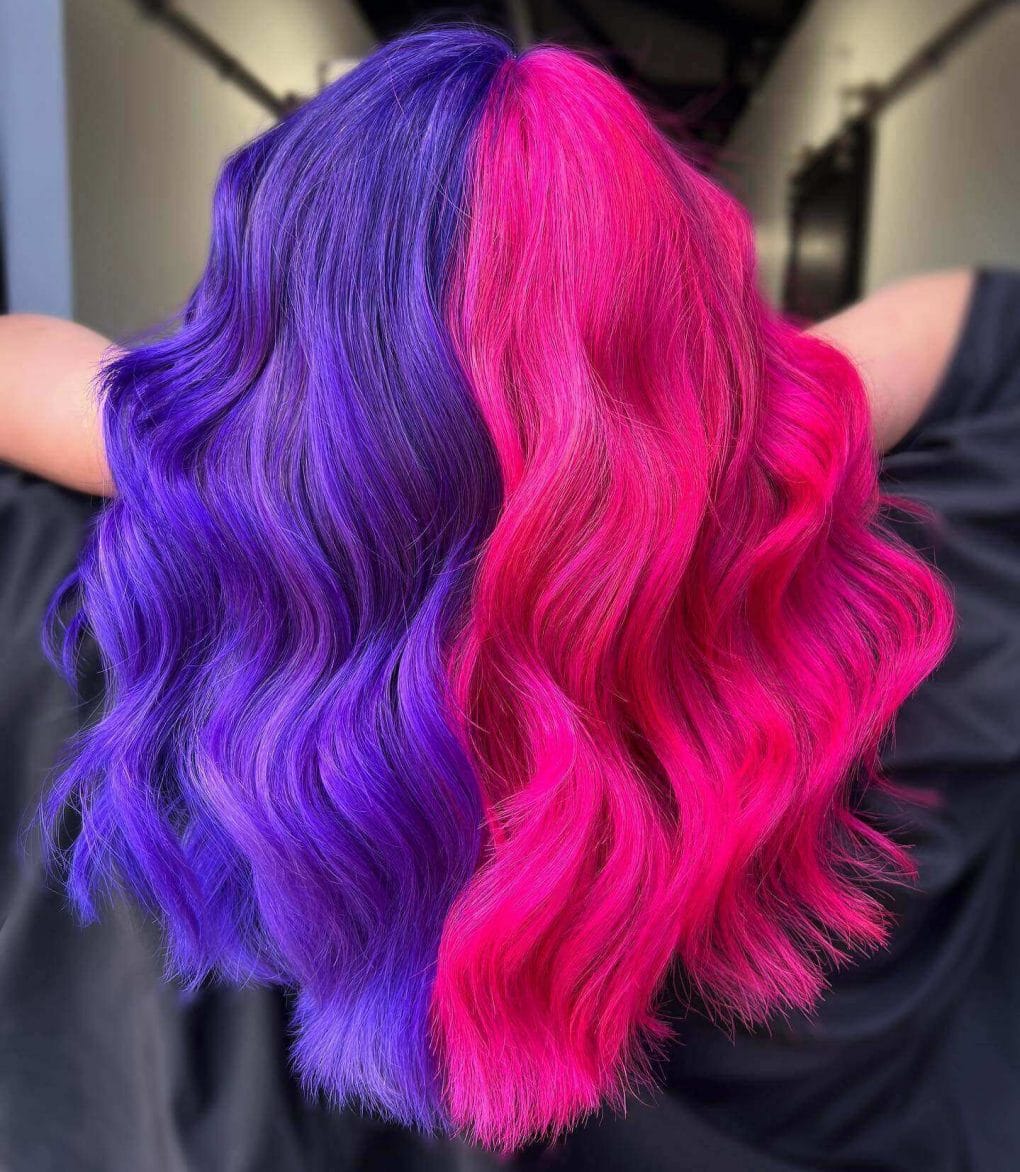
The sharp middle part is the unsung hero of this split dye: without it, the division between vibrant purple and hot pink would read as a mistake rather than a deliberate design. Long layers keep the wavy texture from looking heavy, and because there are no bangs, the color line runs uninterrupted from root to end. Medium to thick hair at mid-back length or longer holds the saturation best. Ask your colorist for: mid-back length wavy hair with a sharp purple and hot pink split dye. Color like this requires salon application for a clean edge; at home, the risk of bleeding across the part is high. A weekly deep condition prevents the vivid tones from fading unevenly, and a toning appointment every four weeks keeps the pink from shifting too warm.
Styling is simple. Loose waves soften the contrast slightly, but a straight or gently waved finish works equally well. The split dye does the work, so a heat protectant and a quick once-over with a curling wand is all it needs. Trim the ends every eight weeks to keep the long layers from looking straggly.
02. Wavy Bob With Magenta Face-Framing Pieces
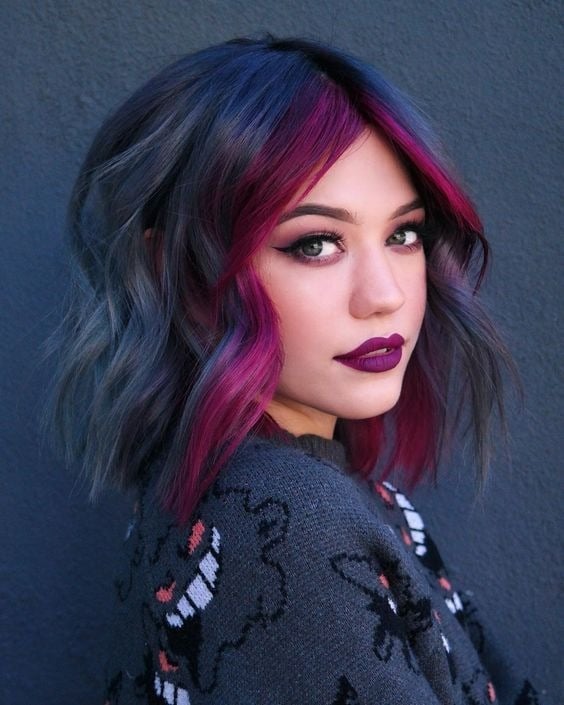
Is the gray base too cool for your taste? The magenta face-framing pieces solve that by pulling the whole look into warmer territory. The collarbone-length bob with a side parting suits fine to medium textures, and the wavy finish adds movement without demanding much density. Soft layers around the jaw help the magenta blend into the gray rather than sitting as a separate block. Ask your colorist for: collarbone wavy bob with magenta face-framing pieces and gray base. The face-framing technique works especially well if you have a square or round face, because the darker gray recedes and the lighter magenta draws attention to the center. Styling takes about ten minutes: a texturizing spray on damp hair, then air-dry or a diffuser for soft waves. Trim the bob every six to eight weeks to keep the collarbone line precise.
03. Collarbone Bob In Teal And Orange Braids
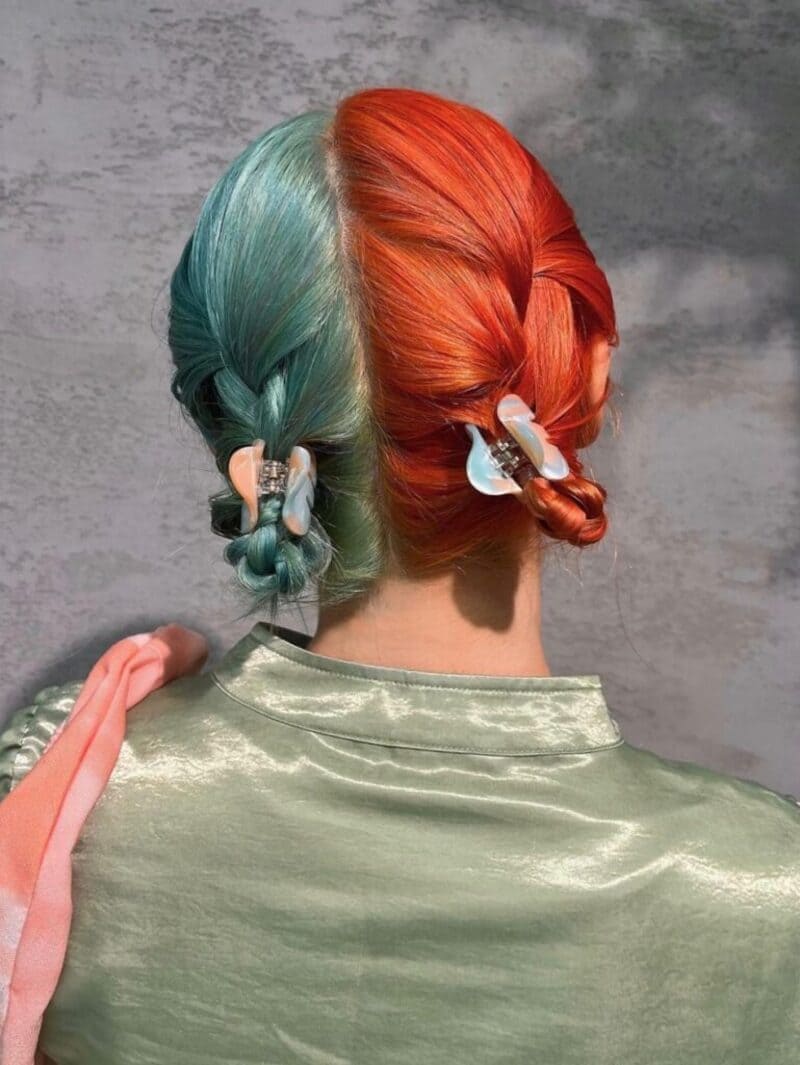
The collarbone bob keeps the braids from feeling heavy, and the straight texture makes the division clean. Fine hair actually benefits here, because the two braids create the illusion of more density. Ask your colorist for: collarbone bob with teal and orange braided pigtails. The braided style makes this a natural choice for festivals or casual weekends when you want the color to read from a distance. Braid the hair while it is slightly damp for a sleeker finish, then spritz with a light hold hairspray to prevent flyaways. The one thing to know: this is a commitment. A root touch-up every three weeks keeps the teal and orange from muddying at the part, and the braids need to be redone each time you wash.
04. Collarbone Blunt Bob In Pink And Blue
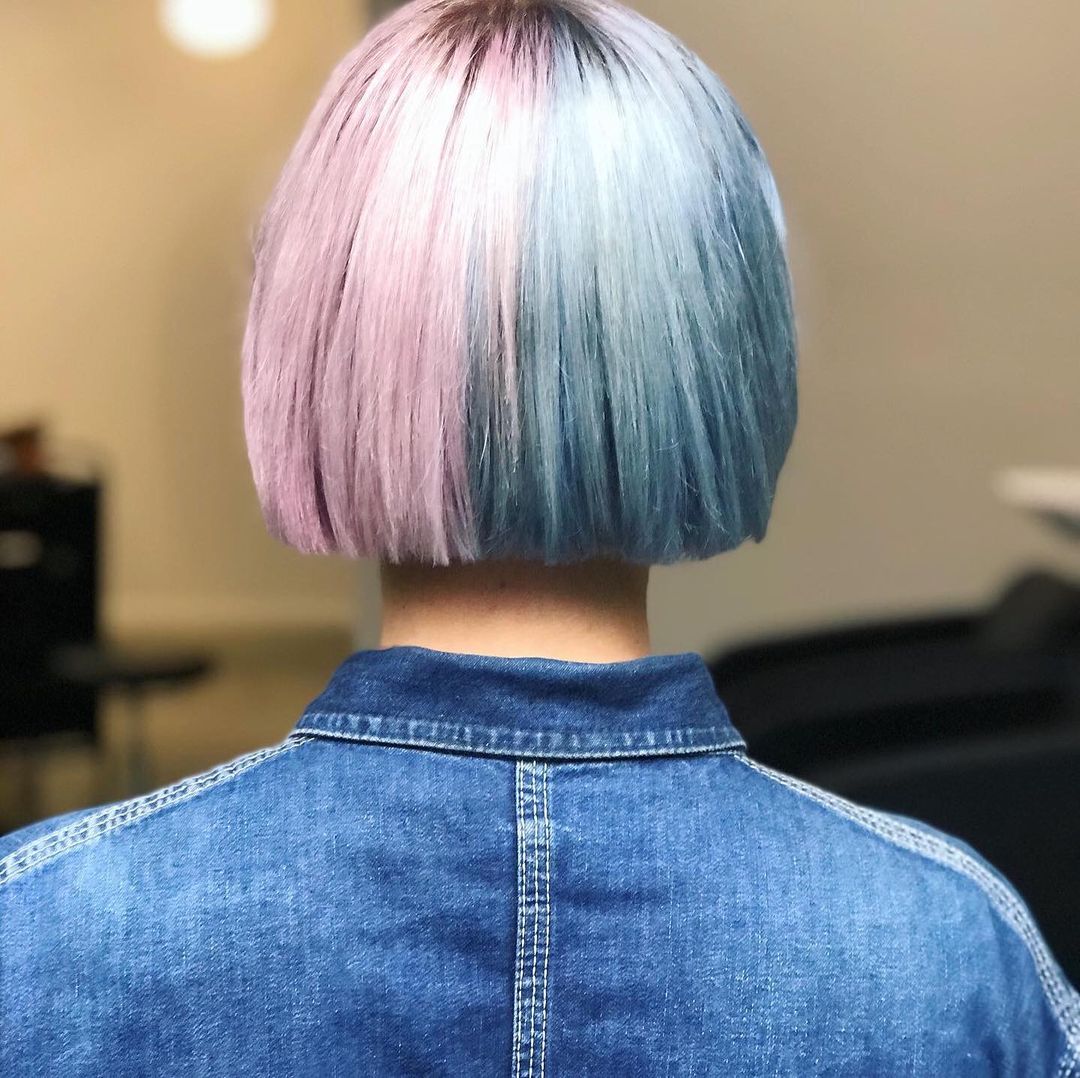
A blunt collarbone bob with a vertical split color is a precise request. Pastel pink on one side, pastel blue on the other, divided by a razor-straight middle part. The blunt cut means no layers to soften the edge, which is exactly the point. Fine to medium straight hair holds the sharp line best; any wave or curl disrupts the geometry. Ask your colorist for: collarbone blunt bob with pink and blue vertical split color. Bring a photo of the exact pink and blue you want, because pastel reads differently on every base. The stylist will need to pre-lighten each side separately to get the same pastel level. Styling at home is straightforward: a flat iron with a heat protectant, a smooth finish, done. Trim the blunt baseline every six weeks, or the bob starts to look ragged instead of deliberate.
05. Collarbone Lob In Red And Blue Space Buns
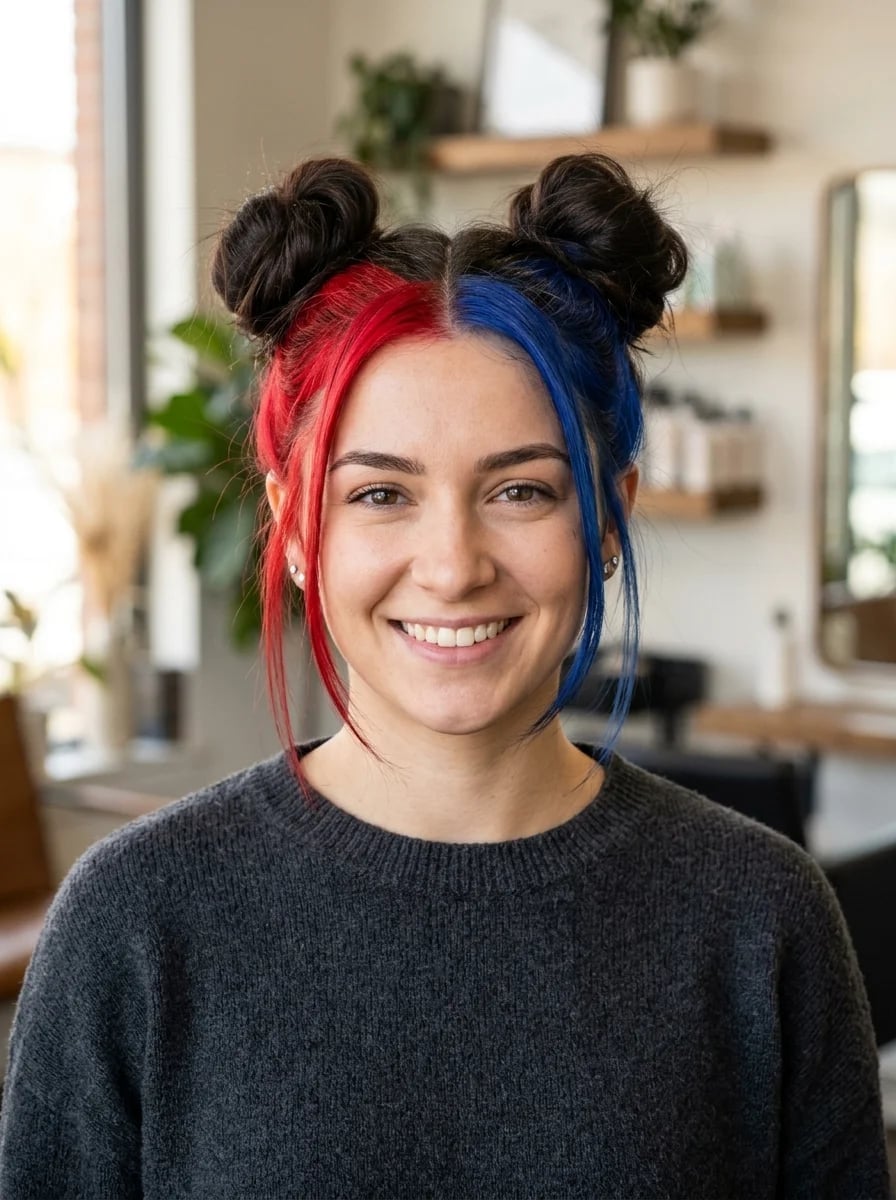
Two high space buns, one side vibrant red, the other bright blue, parted down the middle. The collarbone lob gives enough length to pull the hair up without leaving awkward ends, and fine straight texture makes the buns sit neatly without puffing out. Ask your colorist for: collarbone lob styled in red and blue space buns. Fine hair shows every bit of root regrowth, and the red-blue division means you cannot hide a grow-out line with a single toner. A root touch-up every two to three weeks is realistic. Styling is about grip: apply a texturizing product on dry hair before twisting, then secure each bun with elastics and pins. The buns hold for a full day if you pin them tightly, but overnight they will loosen. Trim the lob every eight weeks to keep the collarbone line clean when the hair is down.
06. Collarbone Bob In Red And Orange
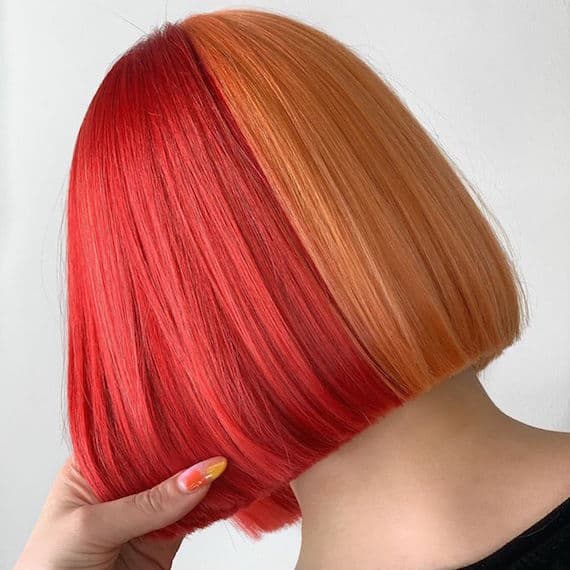
Can a vertical split dye really hold its line on a short cut? On a collarbone blunt bob with a middle parting, the answer is yes, provided you commit to the straight styling. Ask your colorist for: collarbone blunt bob with red and orange vertical split color. The sharp color separation works best on fine to medium hair that holds a flat ironed finish without frizz. A healthy dose of heat protectant before you press keeps the line crisp, and that blunt baseline needs a trim every six weeks to prevent the ends from fraying into the color boundary.
07. Shoulder Length Shag With Orange And Blonde Streaks
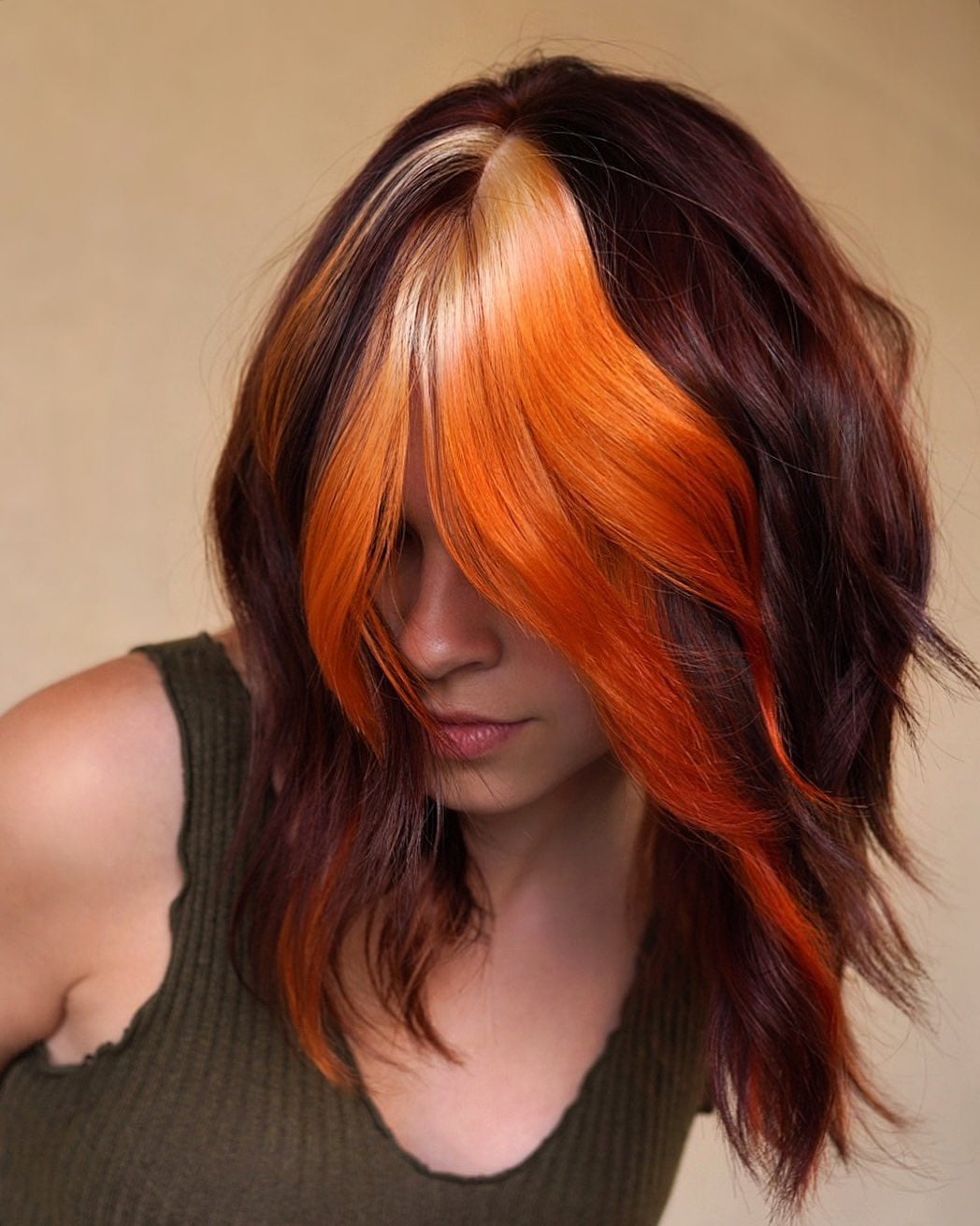
A shag cut is designed for texture, but those layers also dictate where the color lands. The full bangs and face-framing orange and blonde streaks here sit exactly where the shag’s shortest pieces fall, so the brightness is part of the cut. Ask your stylist for: shoulder length shag with full bangs and face-framing orange blonde streaks. The internal layering and air-dried finish work best on thick, wavy hair. The trade-off? Bangs this full need a trim every four weeks or they start grazing your eyes.
08. Shoulder Length Afro With Teal Highlights
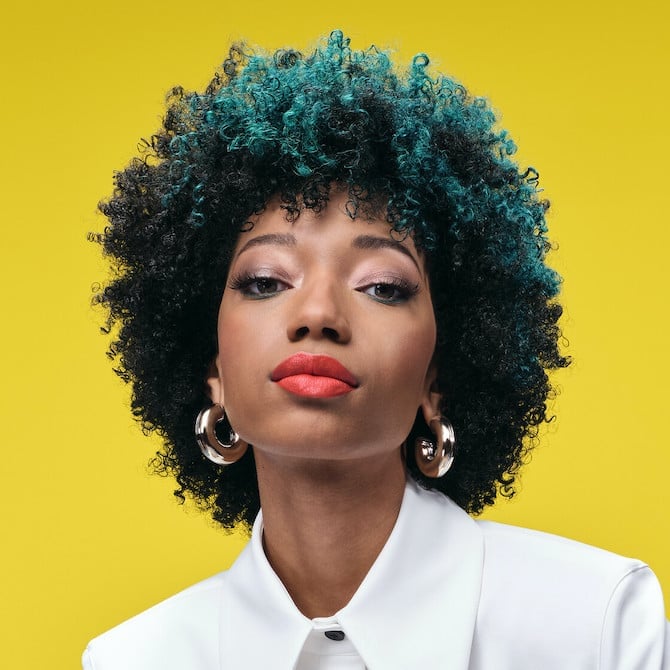
Teal on dark hair is a contrast that relies on placement. Here the highlights are concentrated on the top layers of a shoulder-length afro with a side parting, so the color sits on the surface rather than getting lost in the density. Ask your colorist for: shoulder length afro with teal highlights on top layers. The look genuinely flatters naturally curly, thick hair because the volume provides a backdrop for the teal to register as separate strands. Those with finer curls may find the color disappears into the texture rather than standing out.
09. Collarbone Lob In Gray And Blonde With Face-Framing
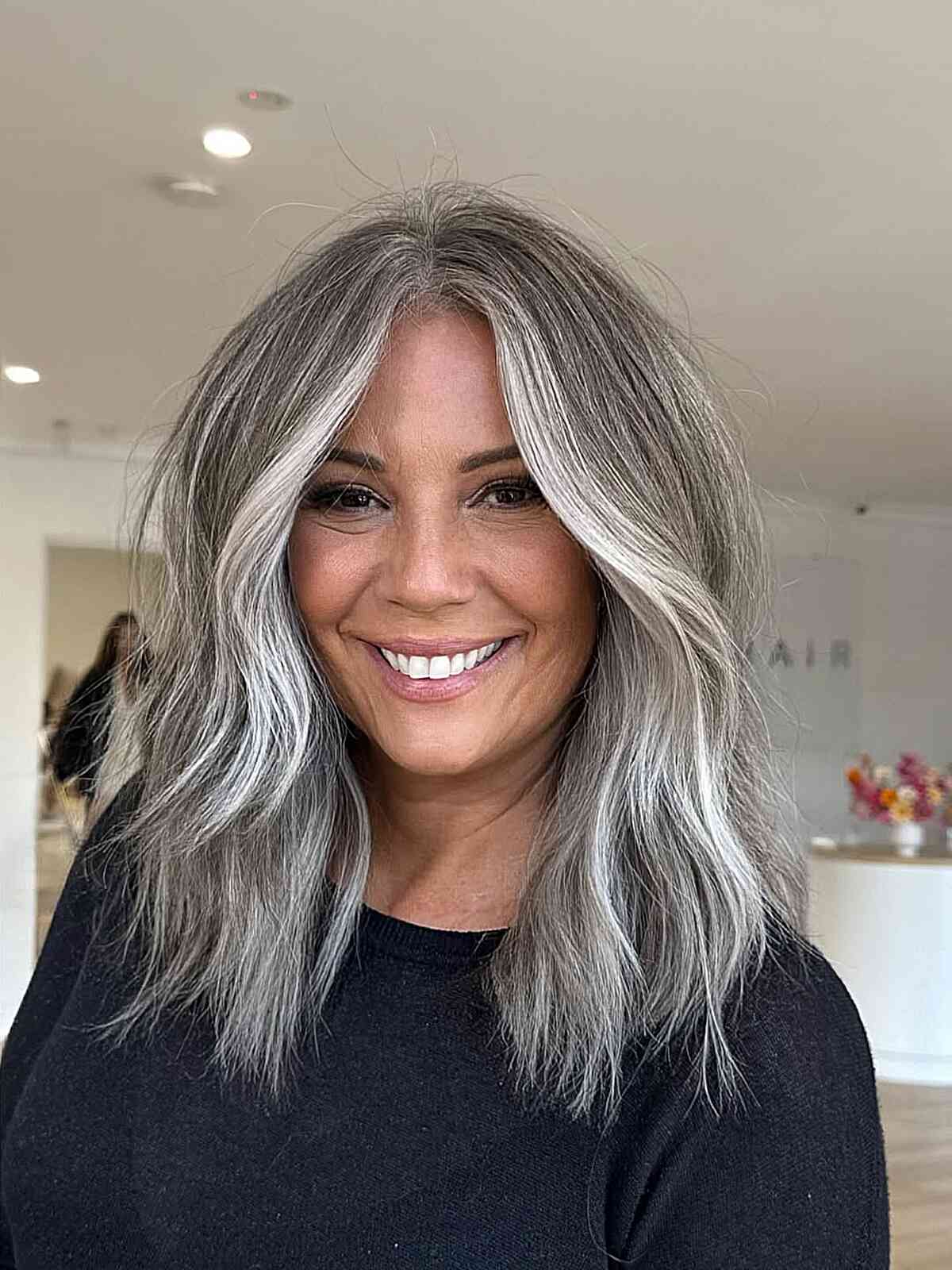
Why does gray and blonde feel like a transitional season color? The cool gray base keeps things muted, while the lighter blonde face-framing pieces add a warmth that works for the shift between summer and fall. Ask your colorist for: collarbone lob with gray and blonde color and lighter blonde face-framing. The loose waves soften the two-tone boundary, and the medium-length collarbone cut keeps the look practical. A glossing treatment every four weeks helps the blonde pieces stay bright against the gray, which tends to grab cooler tones from the environment.
10. Mid-Back Layers With Dark Brown To Purple Gradient
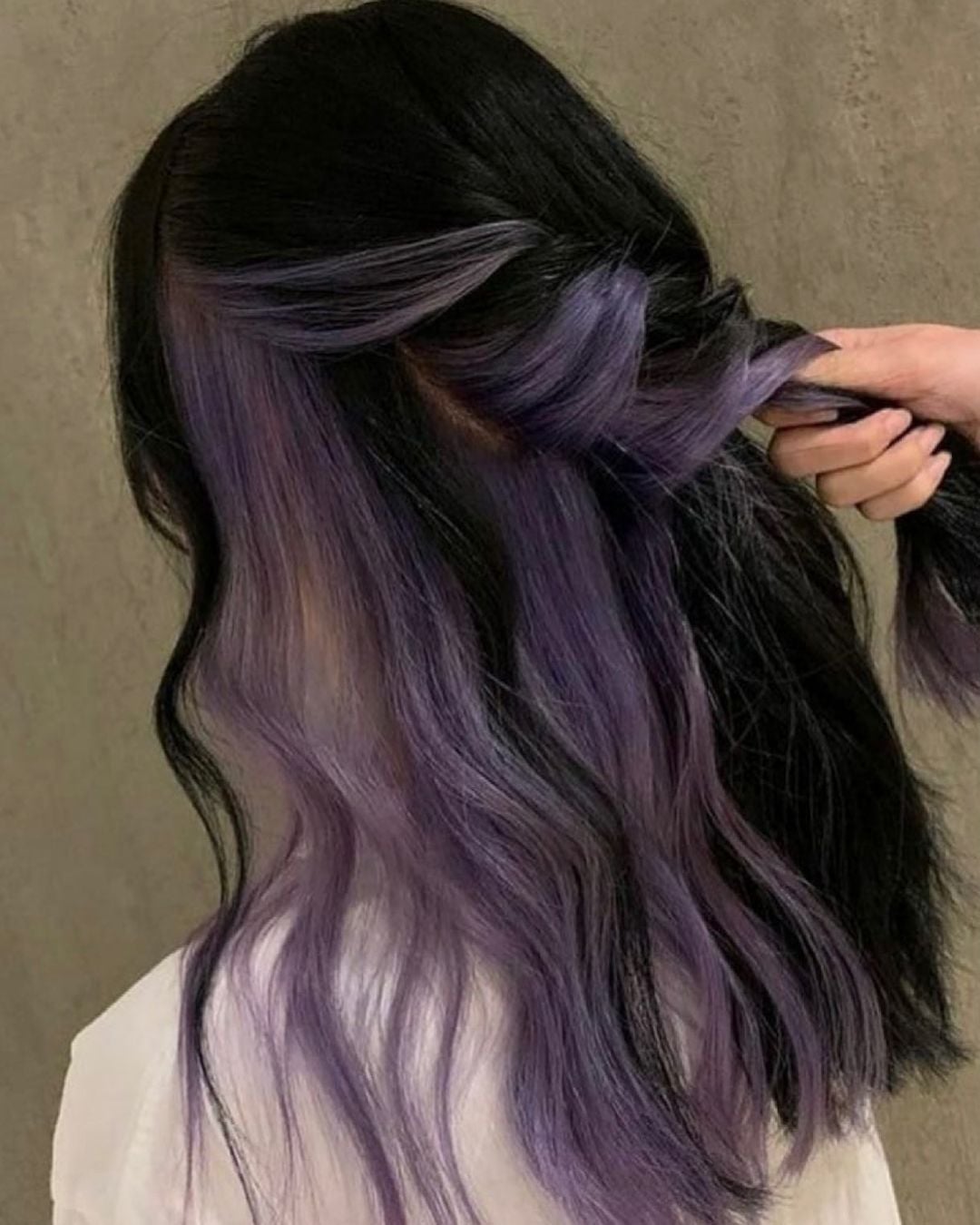
A gradient transition from dark brown at the roots to vibrant purple at the ends works because the long layers create a gradual color drop rather than a harsh line. The subtle braided accent woven through the loose waves adds structure for the thicker texture. Ask your colorist for: mid-back layered hair with dark brown to purple root-to-tip gradient. Styling is straightforward: the wavy texture does the work, and a lightweight curl cream keeps the ends defined. The layers need a trim every ten to twelve weeks to maintain their shape as the color grows out.
11. Mid-Back Layers With Blonde Balayage
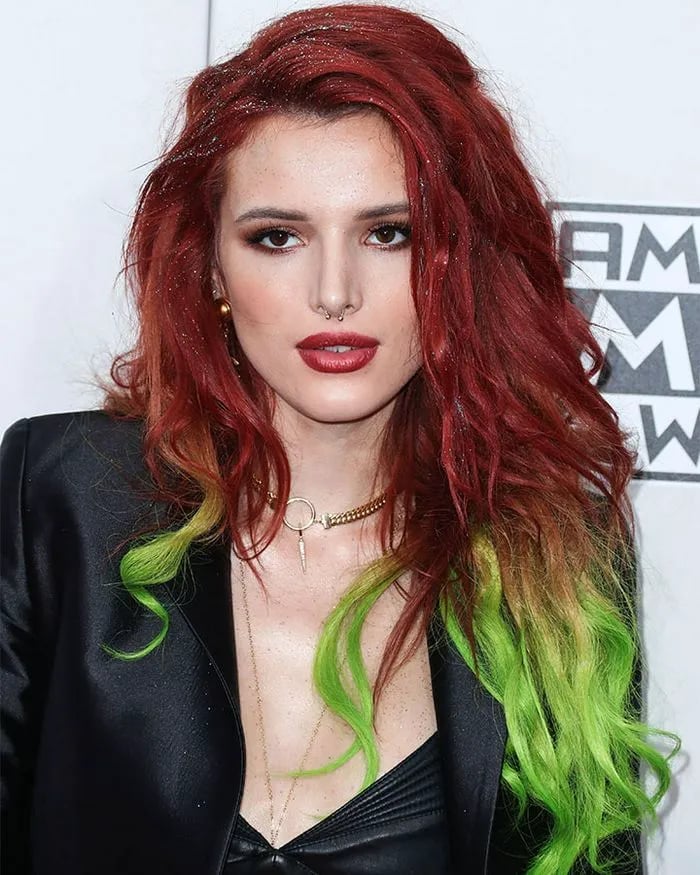
A dark brown base with a blonde balayage is the low-commitment way to go two-tone without a hard line. The technique paints lighter pieces onto thick, wavy hair at mid-back length, so the color lands where the sun would naturally hit. It works best on wavy or curly textures, where the loose waves help the blend look soft. Ask your colorist for: mid-back layered hair with dark brown base and blonde balayage.
This color needs a stylist’s hand to place the lightener so the grow-out stays wearable for months, not weeks. A trim every ten to twelve weeks keeps the layers from going shapeless. If you want a sun-kissed effect that avoids a touch-up every six weeks, this is the one. Skip it if you prefer a stark, graphic contrast.
12. Mid-Back Layers In Black And White
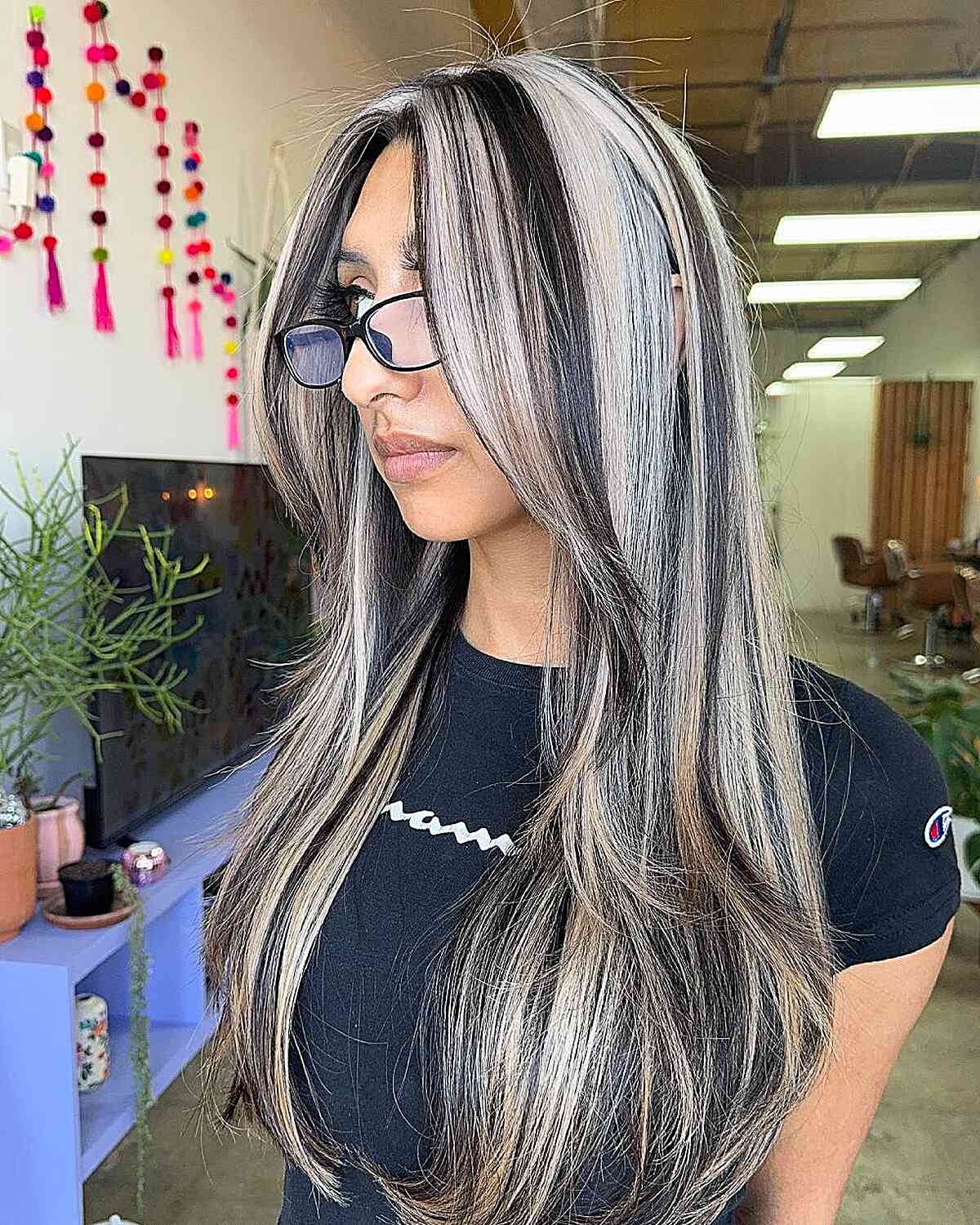
Where a balayage blends, this black and white combination announces itself. The mid-back layers are cut with face-framing pieces and styled in loose waves on thick hair, with the two colors kept separate rather than melted together. The side parting adds a little asymmetry to the high-contrast look. Ask your stylist for: mid-back layered hair with face-framing layers in black and white.
The drawback is the upkeep. The white sections will pull warm over time, especially if your water has mineral content, so a purple shampoo is non-negotiable. The black base needs refreshing every four to five weeks to stay true. This is a salon-only color that asks for regular maintenance, but if you want a graphic statement, the effort is part of the point.
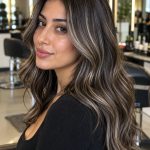
13. Mid-Back Layers With Black Base And Blonde Highlights
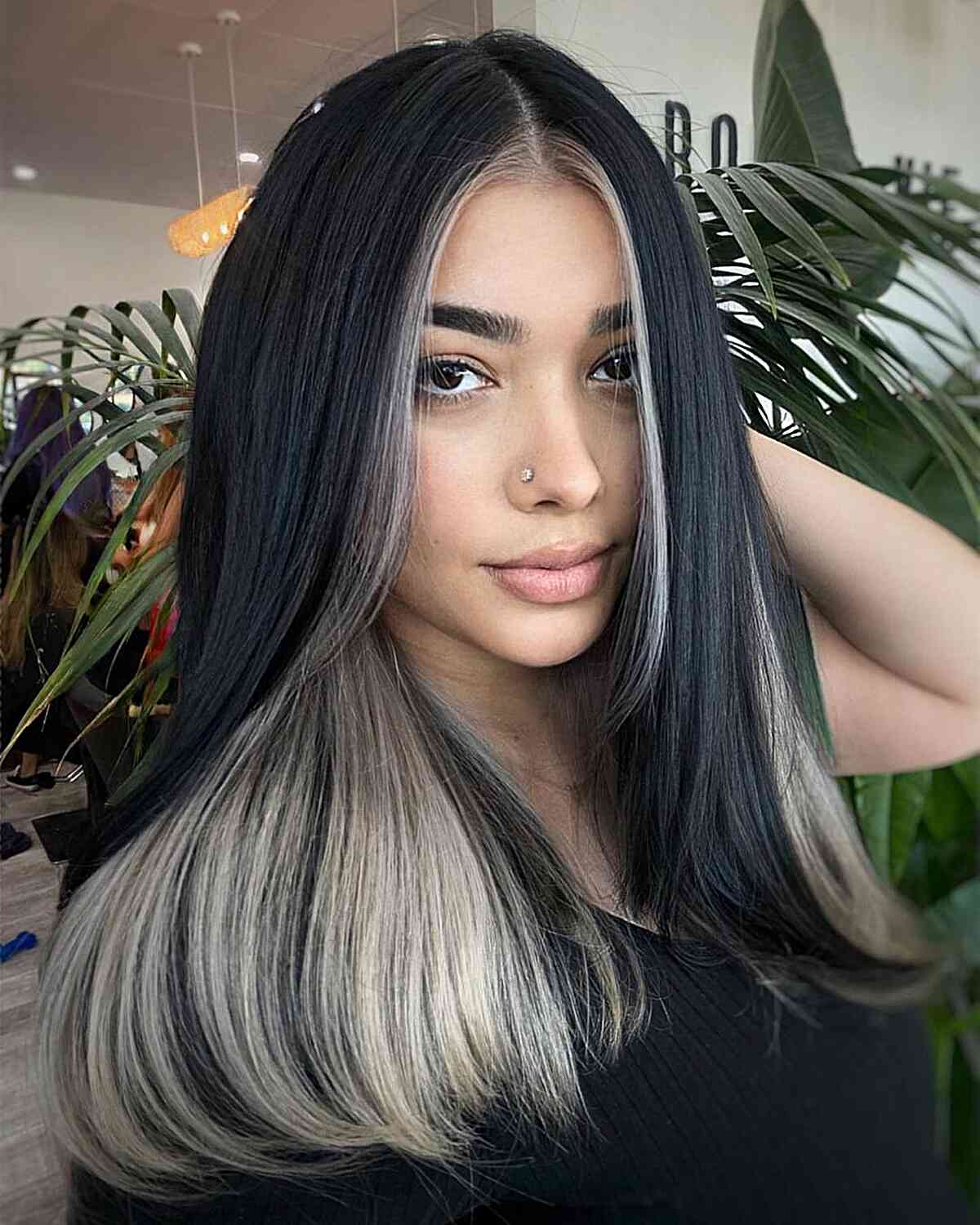
For a two-tone effect that looks classic, ask for a black base with blonde highlights on mid-back layers and curtain bangs. The photo shows a smooth blowout on thick, straight hair, with the highlights placed to create contrast without overwhelming the dark base. The middle part and curtain bangs keep the look soft.
Bring a photo of the exact contrast level you want. The key details to communicate are: black base with blonde highlights, mid-back layers, curtain bangs. If the highlights are too fine, the contrast gets lost; too thick, and it looks chunky. A good stylist will use a foil technique to keep the blonde sections separate from the dark, so the two-tone stays crisp. The curtain bangs should be cut to blend into the layers, not sit as a separate piece.
14. Mid-Back Layers With Black And Platinum Face-Framing
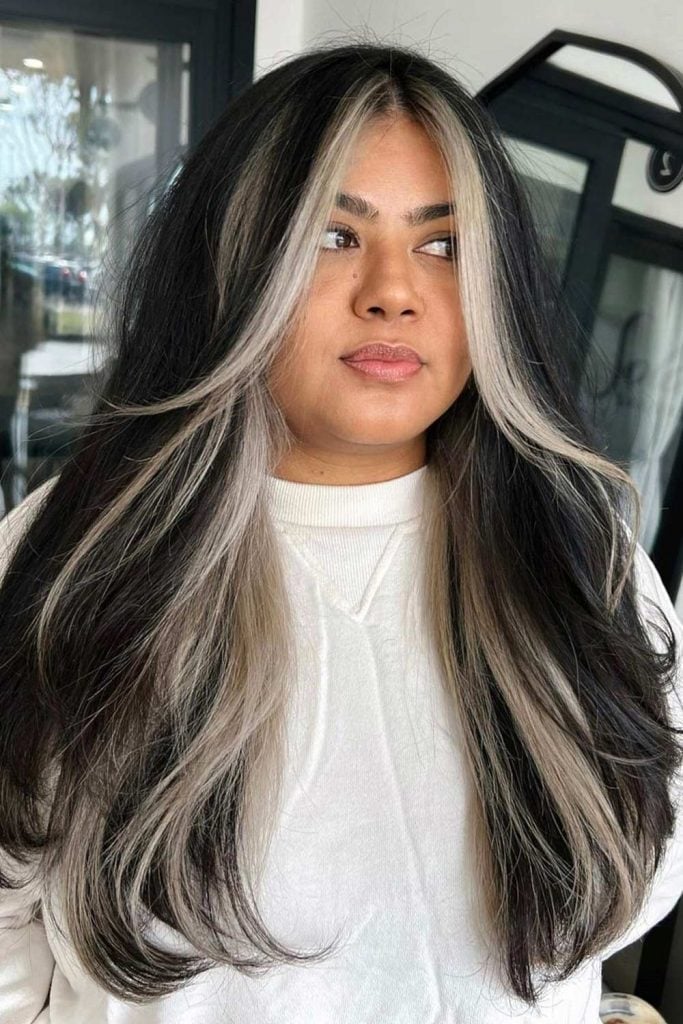
Platinum face-framing highlights on a black base create a high contrast look. The long layers at mid-back length give the color room to breathe, and the wispy bangs prevent the platinum from feeling heavy. The hair is air-dried into loose waves, which softens the line between the two shades. Ask your colorist for: mid-back long layers with black base, platinum blonde face-framing highlights, wispy bangs.
The upkeep is where this design asks for commitment. The platinum pieces need a toner every four to six weeks to stay icy and not brassy, and the wispy bangs need a trim every three to four weeks to keep their shape. The payoff is a look that is modern. Use a texturizing spray on the waves to add definition without weighing down the layers.
15. Mid-Back Layers With Blonde Root Melt
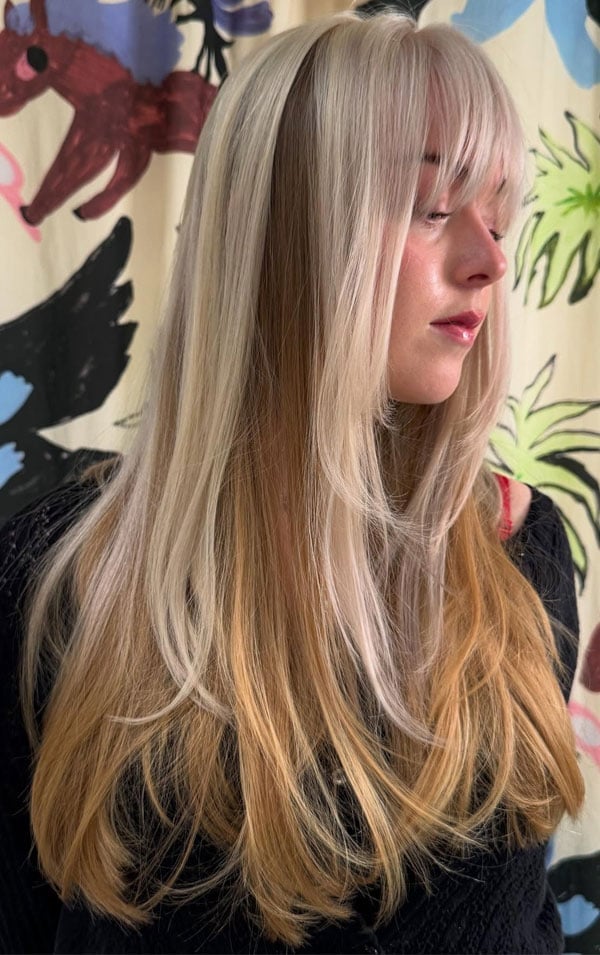
A root melt builds a two-tone effect from darker roots into lighter ends, creating depth without a hard grow-out line. The long layers at mid-back length are cut with curtain bangs and styled in loose waves on fine, straight hair. The middle part lets the color transition show evenly on both sides. Ask your colorist for: mid-back long layers with curtain bangs and a blonde root melt.
The root melt can look muddy if the darker base and lighter ends are too close in tone. The technique works best when the contrast is clear and deliberate. A gloss treatment every eight weeks keeps the blonde ends from going dull. The layers help the color move with the hair and avoid a flat appearance.
16. Pixie Cut With Blonde And Brunette Contrast
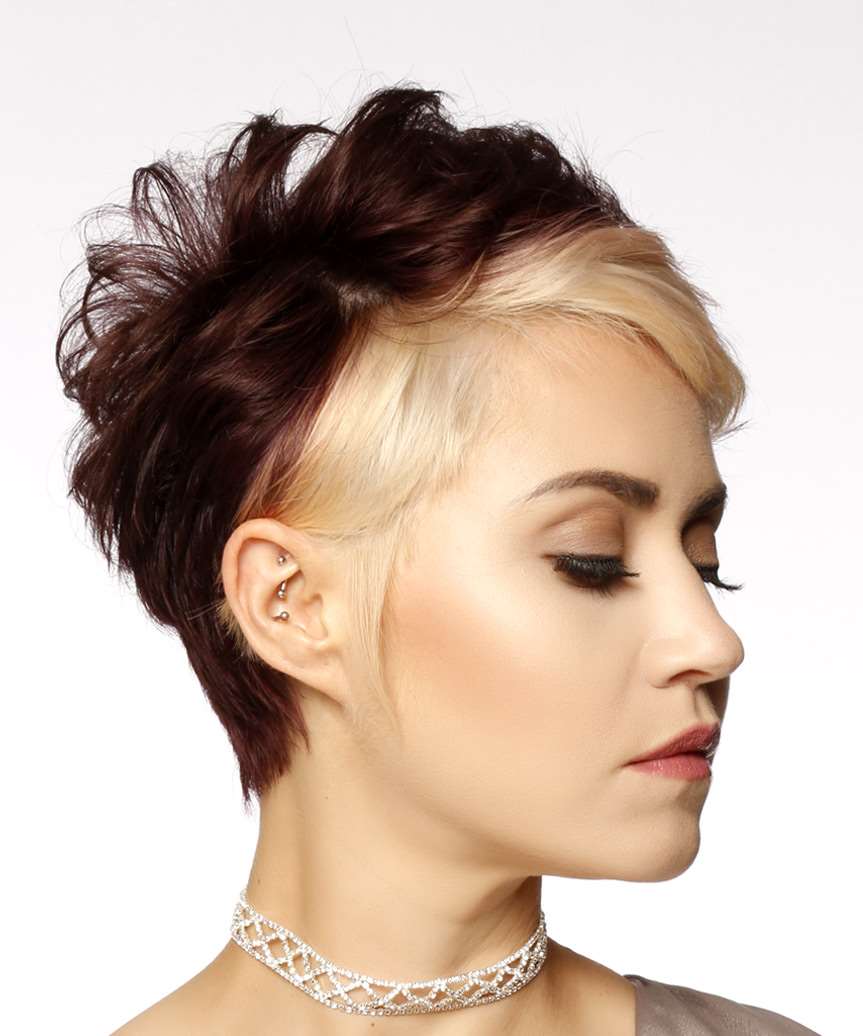
The short bangs and side parting keep the contrast graphic, and the fine, straight texture lets each shade sit cleanly. Ask your stylist for: pixie cut with short bangs, light blonde on one side and dark brunette on the other. A textured finish adds movement so the color looks planned. It suits most face shapes, though the strong horizontal line at the ear draws attention to the jaw, so softer features might prefer a longer crop.
17. Final Thoughts
Fine hair with two tones works best when one shade stays close to your natural base, so the grow-out line stays soft. Thick hair can carry a sharp color block, but that line needs a touch-up every six weeks to stay crisp. Either way, two-tone hair is a canvas for bold expression.
- Schedule salon toning touch-ups every 6-8 weeks for vibrant colors.
- Use color-safe shampoo and conditioner to preserve pigment.
- Minimize heat styling to prevent color fade and damage.
- Protect hair from sun exposure, which can dull vibrant tones.
More Hair Color ideas
- Classy Ginger Highlights 2027 for a Warm Glow
- Classy Honey Blonde Highlights 2027 for a Sun-Kissed Glow
- Classy Highlights on Blonde 2027
- Trendy Highlights in Brown Hair 2027 with Caramel Golden Touches
- Curly Hair Color Inspiration 2027
- Highlights Brown Hair Ideas 2027 with Caramel & Honey Tones
- Purple Hair Color Styles 2027 with Vivid Violet Balayage
- Trendy Blue Hair Color Ideas for 2027
- Classy Blonde Highlights 2027 for Subtle Dimension
- Trendy Strawberry Blonde Hair Color Ideas 2027
- Classy Dark Brown Hair with Blonde 2027 Balayage
- Ash Brown Hair Ideas 2027 with Greyish Highlights