Mastering the Art of Detangling Hair Without Breakage
Learn the proper detangling techniques to remove knots without breakage or pain. Discover how to achieve smooth, healthy, tangle-free hair with ease.


Tangled hair can be frustrating, especially when every detangling session feels like a battle. The key is to approach it gently and methodically, so you can remove knots without breaking strands or hurting your scalp. In this article, I’ll walk you through the steps that work for all hair types, from fine to coily, and share the tools and tricks that make the process easier.
Key Takeaways
- Always detangle on damp or wet hair with a detangling product for slip.
- Start combing from the ends and work upward to avoid compacting knots.
- Use a wide-tooth comb or detangling brush, not a fine-tooth comb.
- Section hair into manageable parts to make detangling thorough and gentle.
- For curly or coily hair, finger detangle first to minimize breakage.
1. The Secret to Gentle Detangling
The secret to gentle detangling is doing it on damp or wet hair, never dry. Always apply a detangling product like conditioner or a leave-in spray to create slip, which lets knots slide apart instead of snapping. Work from the very ends of your hair upward with a wide-tooth comb or detangling brush. Patience and a light hand are what prevent breakage.
2. Your Detangling Tool Kit
Having the right tools makes detangling faster and safer. Here is what you need:
- Wide-tooth comb: Essential for all hair types, especially thick or curly, because it glides through knots without snagging.
- Detangling brush: Designed with flexible bristles to minimize pulling and reduce breakage.
- Leave-in conditioner or detangling spray: Adds slip and hydration so tangles release easily.
- Hair conditioner (rinse-out): Use generously on wet hair for extra lubrication during washing.
- Spray bottle: For misting water on hair that starts to dry mid-process.
- Hair clips or ties: For sectioning hair, which keeps the work manageable and thorough.
3. Step-by-Step: Gentle Detangling Method
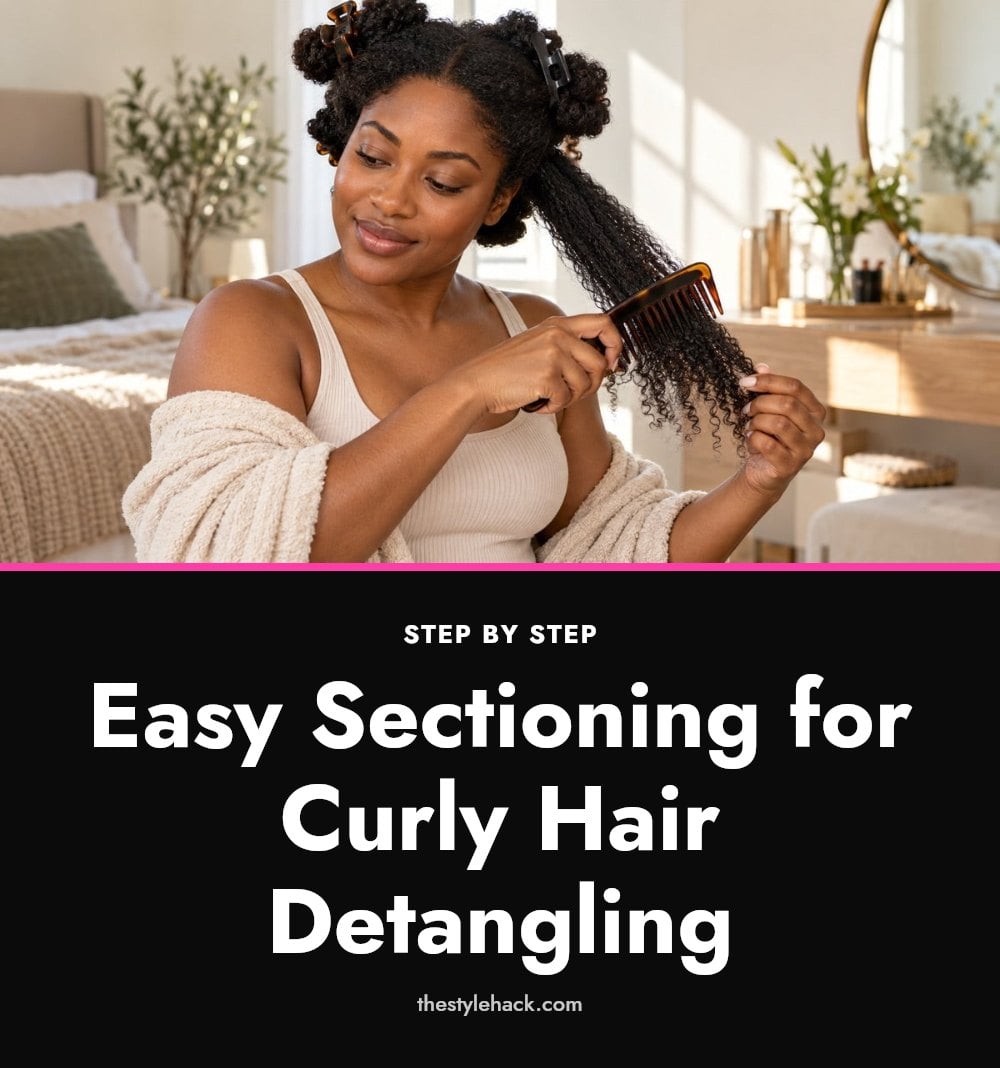
- Dampen your hair: Mist it thoroughly with water or a detangling spray. Hair is most fragile when wet, so gentle handling is essential.
- Apply product: Work a generous amount of conditioner, leave-in conditioner, or detangling spray through your hair from mid-length to ends. The slip is what lets knots loosen without force.
- Section your hair: Use clips or ties to divide hair into manageable parts, such as four to six sections depending on thickness. Work on one section at a time.
- Start at the ends: Hold the section of hair just above the knot to reduce tension on your scalp. Begin combing or brushing at the very ends, gently working out tangles inch by inch as you move upward.
- Move to the next section: Only start a new section after the current one is completely tangle-free. Repeat the ends-up method for each part.
- Tip: If you hit a stubborn knot, apply more product and work it loose with your fingers before using the comb. Rushing causes breakage.
4. Common Detangling Mistakes to Avoid
Avoid these common mistakes to keep your hair healthy:
- Detangling dry hair: Always detangle on damp or wet hair. Dry detangling increases friction and leads to breakage.
- Starting from the roots: This pushes knots downward, making them tighter and causing damage. Always start at the ends and work up.
- Using a fine-tooth comb: Fine teeth snag and tear through tangles. Use a wide-tooth comb or detangling brush instead.
- Pulling or yanking: Force causes hair to snap and can irritate your scalp. Be patient and gentle.
- Not using enough product: Adequate slip is crucial. Without it, knots won’t release easily and strands may break.
5. Top Tips for Tangle-Free Hair

For very curly or coily hair, try finger detangling before you bring in a comb. Gently separate strands with your fingertips, working from the ends up, and you will feel the knots release without the snagging a tool can cause.
My tip: Do not let tangles build up. A quick detangling session every few days keeps small knots from turning into large mats that are painful and damaging to remove. Consistency beats marathon sessions.
Sleeping on a silk or satin pillowcase reduces friction while you move at night, so you wake up with fewer new tangles. Cotton pillowcases grab at the hair cuticle and create knots by morning.
Pro move: When you hit a knot, hold the hair section firmly just above it. This keeps the tension off your scalp and roots, so the comb does the work instead of your hair follicle.
6. When to Consult a Professional Stylist
Most tangles resolve with patience and the right technique, but some signs mean it is time to see a professional. If detangling consistently causes significant pain or scalp irritation, your technique may be harming your follicles, and a stylist can show you a safer approach.
Notice an unusual amount of hair shedding during or after detangling? That is a cue to stop and get a professional assessment. Severely matted hair that will not yield to gentle at-home methods also warrants expert help, as forcing it can cause breakage.
Caution: Check for scalp damage like sores, redness, or inflammation. If you see any, consult a stylist or dermatologist before continuing.
7. Frequently Asked Questions
8. How often should I detangle my hair?
Detangle as often as needed, typically during or after washing your hair. For most people, that means a few times a week, but it can vary based on your hair type and how quickly it tangles. If your hair is prone to knots, regular detangling can prevent them from becoming large, matted tangles that are harder to remove.
9. Can I detangle my hair in the shower?
Yes, detangling in the shower is a great option because your hair is already wet and coated with conditioner. The water and product provide slip, making it easier to work through knots gently. Just be sure to use a wide-tooth comb or your fingers, and start from the ends to avoid breakage.
10. What if my hair is severely matted?
For severely matted hair, patience is key. Work in very small sections, apply plenty of detangling product, and use your fingers first to loosen the mat before using a wide-tooth comb. If you experience significant pain or excessive hair loss, it’s best to consult a professional stylist who can safely remove the matting without damaging your hair.
11. Does hair type affect detangling methods?
Yes, hair type matters. Fine hair may need lighter products and gentler handling to avoid breakage, while thick or curly hair often benefits from more product and finger detangling. Coily hair, in particular, responds well to finger detangling before using a comb, as it minimizes snagging and breakage.
12. Is finger detangling better for certain hair types?
Finger detangling is especially beneficial for very curly or coily hair types. Using your fingertips allows you to gently separate strands and feel where knots are, reducing the risk of breakage that tools can cause. It’s a good first step before bringing in a wide-tooth comb for a smoother finish.
13. Final Thoughts
To keep your hair healthy and tangle-free, make gentle detangling a regular part of your wash routine. Use a wide-tooth comb or detangling brush, always start from the ends, and never pull through knots. Expect the process to take anywhere from a few minutes to an hour, depending on your hair length and texture, so plan accordingly and be patient. With consistent care, you’ll reduce breakage and make future detangling sessions easier.
More Blog ideas
- How to Heal Chapped Lips Overnight with Simple Steps
- Atomic Habits: 5 Lessons to Build Better Habits
- Hyaluronic Acid for Beginners
- How to Build a Gentle Skincare Routine for Sensitive Skin
- Beat Frizzy Hair: Easy Remedies for Smooth, Shiny Strands
- How to Increase Your Daily Drinking Water Intake
- Washing Hair Mistakes to Avoid and What to Do Instead
- Bleaching Hair Tips for Less Damage
- How to Make Your Body Mist Last Longer All Day
- How to Fix Your Skincare Routine
- Nervous System Regulation Tips
- Vagus Nerve Exercises for Stress Relief






