8 Posture Exercises to Do at Your Desk Every Day
Improve your posture and reduce discomfort with 8 simple exercises you can do at your desk. Learn how to strengthen your core and relieve neck pain.

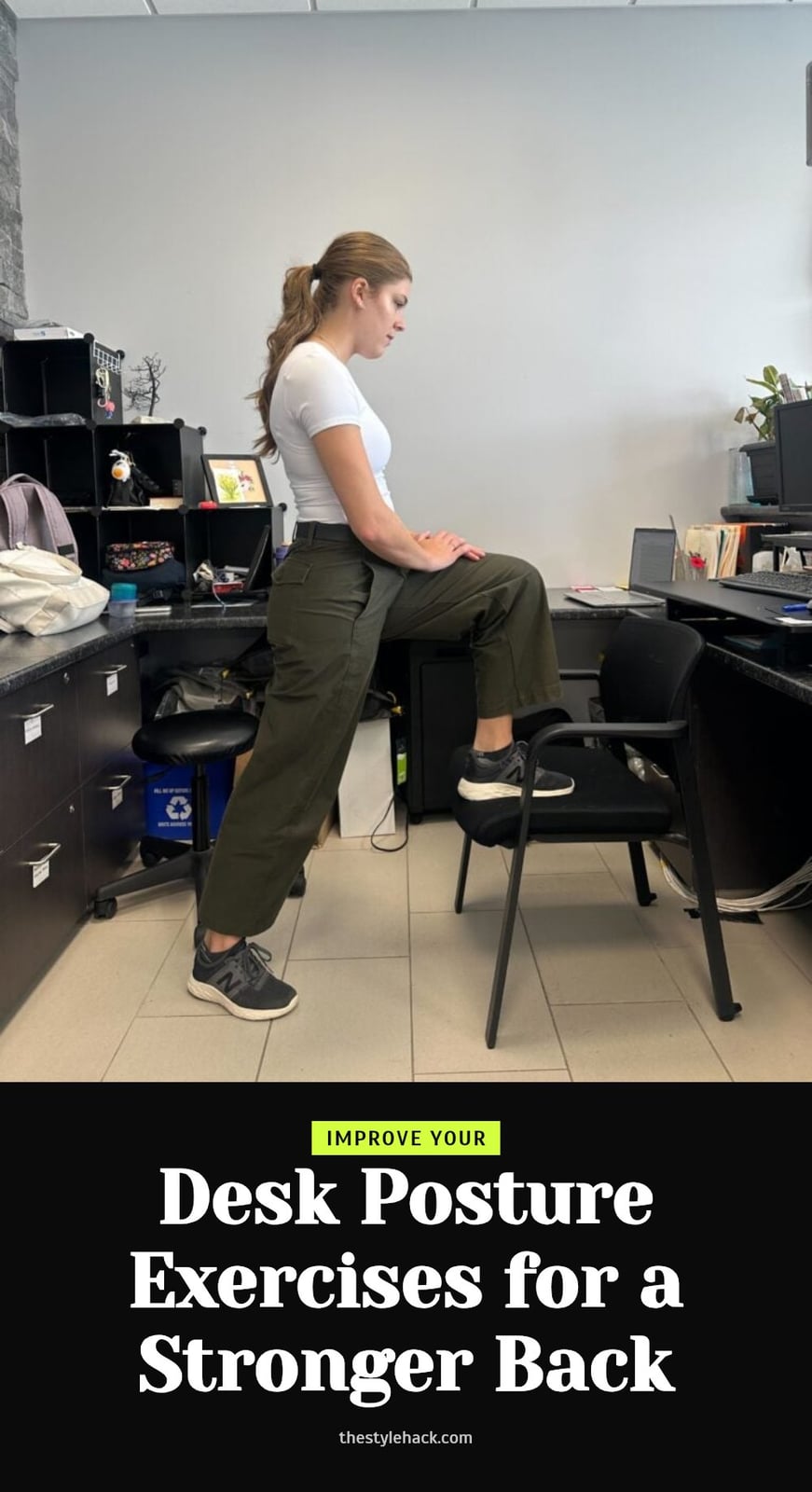
If you spend most of your day sitting at a desk, you’ve probably felt that familiar ache in your neck or lower back. The good news is that you don’t need a gym or a lot of time to start feeling better. This article covers eight simple posture exercises you can do right at your desk, along with tips on how to avoid common mistakes and build a routine that actually works.
Key Takeaways
- Perform exercises slowly and with control to engage the correct muscles.
- Take short breaks every 30 to 60 minutes to stand and stretch.
- Combine posture exercises with an ergonomic desk setup for best results.
- Noticeable improvements in comfort and posture can often be felt within a few weeks of daily practice.
- Stop any exercise that causes sharp pain, numbness, or tingling and consult a healthcare professional.
01. 1. Chin Tucks
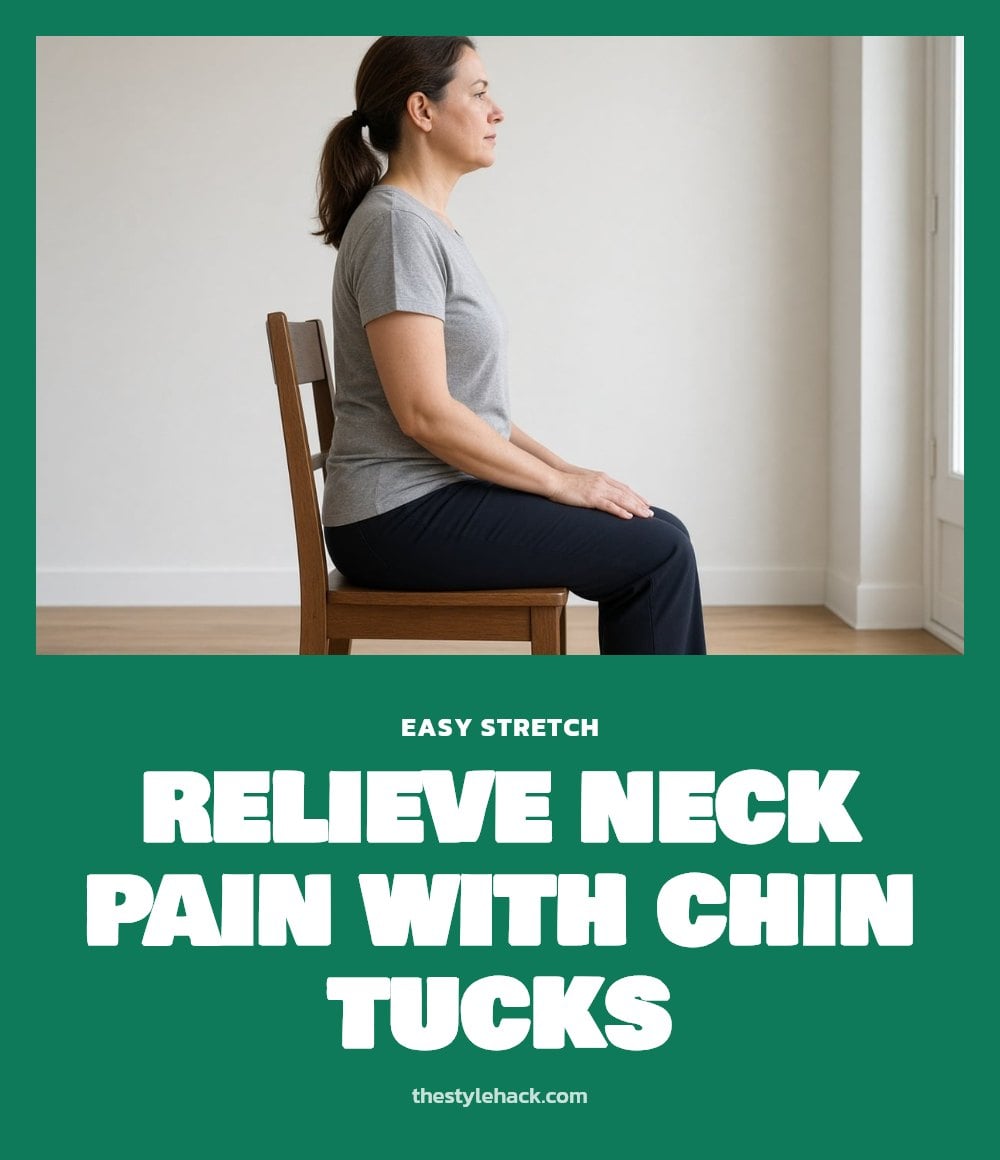
Sit tall in your chair with your head level. Gently pull your chin straight back, as if making a double chin, without tilting your head down. You should feel a lengthening along the back of your neck. Hold for 5 seconds, then release. Repeat 10 to 15 times.
- Sets and reps: 1 set of 10-15 holds
- Form cue: Keep your eyes on the same spot on the wall to avoid tilting
- Make it easier or harder: Reduce to 5 reps if you feel strain; increase hold time to 10 seconds as you improve
02. 2. Shoulder Blade Squeezes
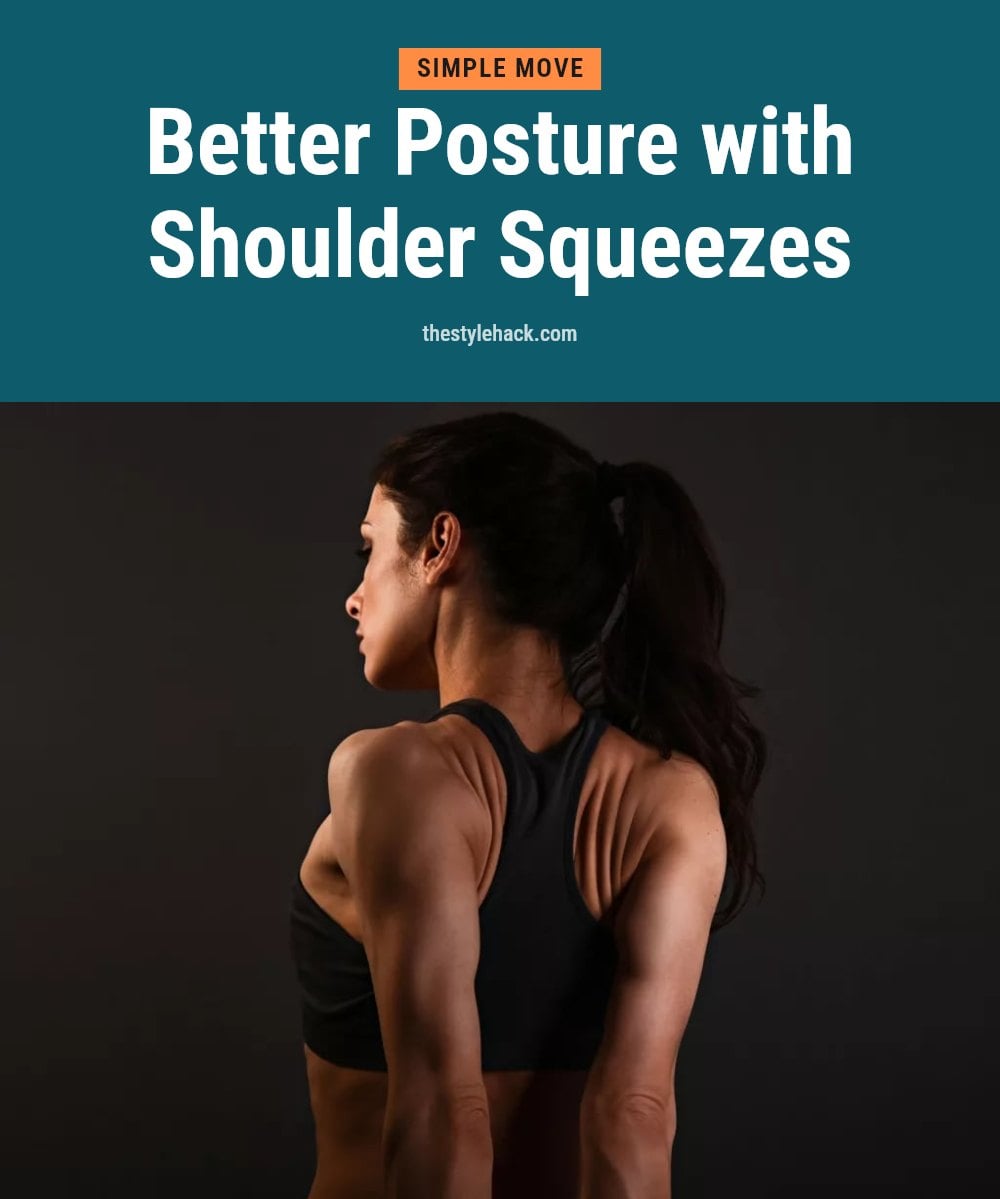
Sit or stand tall with your shoulders relaxed and down, away from your ears. Gently squeeze your shoulder blades together as if holding a pencil between them. Hold the squeeze for 3 to 5 seconds, then release. Repeat 10 to 15 times. This strengthens the rhomboids and trapezius muscles that pull your shoulders back.
- Sets and reps: 1 set of 10-15 squeezes
- Form cue: Keep your shoulders down, avoid shrugging upward
- Make it easier or harder: Start with 5 reps; add a resistance band held in front of you for more challenge
03. 3. Chest Stretch at Doorway
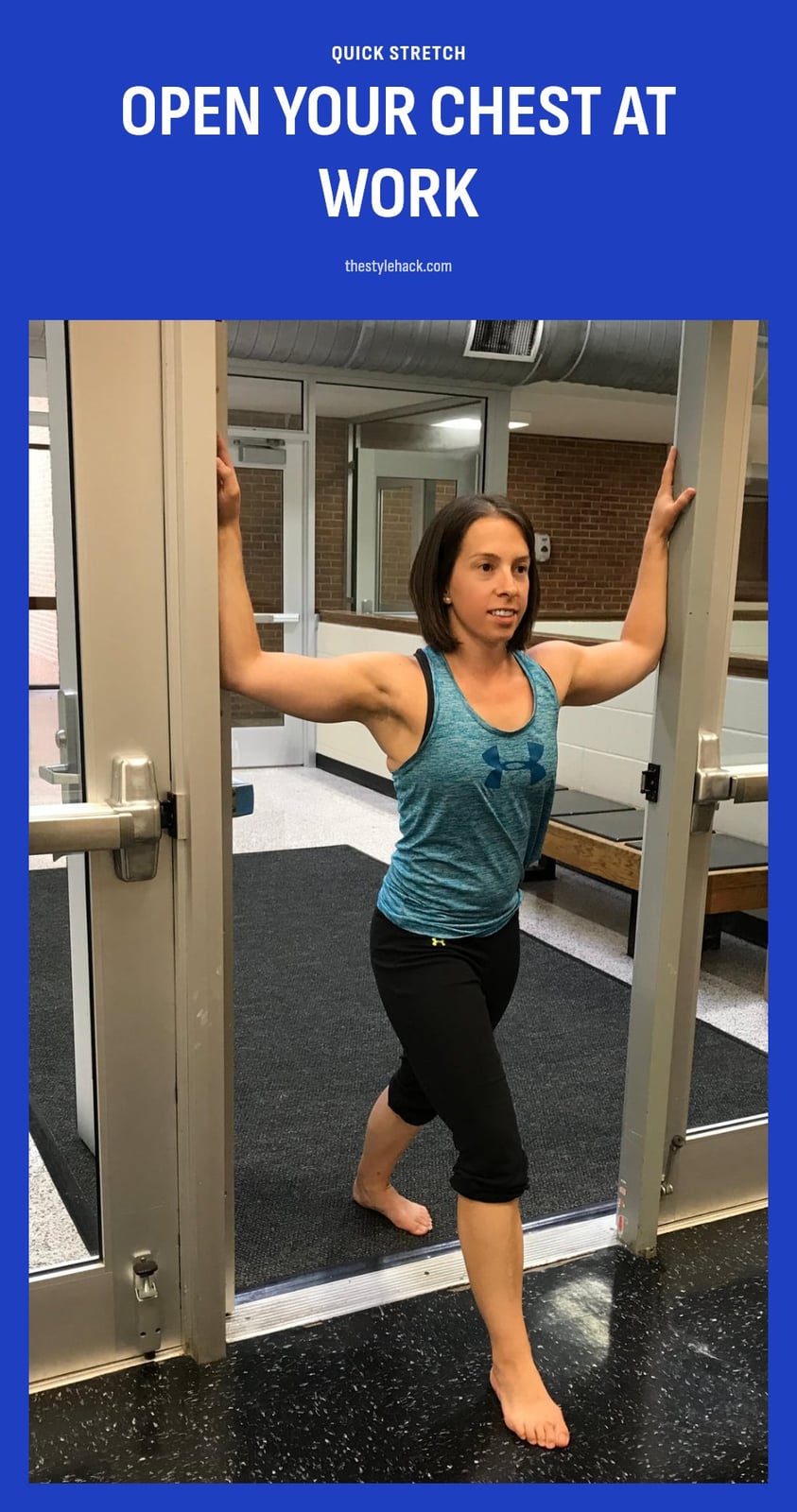
Stand in a doorway and place both forearms on the door frame, elbows bent at 90 degrees. Step one foot forward gently until you feel a stretch across your chest and front of your shoulders. Keep your back neutral, don’t arch your lower back. Hold for 20 to 30 seconds, then step back. Repeat 2 to 3 times. This stretch helps counteract rounded shoulders by loosening tight chest muscles.
- Sets and reps: 2-3 holds of 20-30 seconds
- Form cue: Keep your core engaged to avoid arching your lower back
- Make it easier or harder: Step forward less for a milder stretch; raise your arms slightly higher on the frame for a deeper stretch
04. 4. Seated Cat-Cow
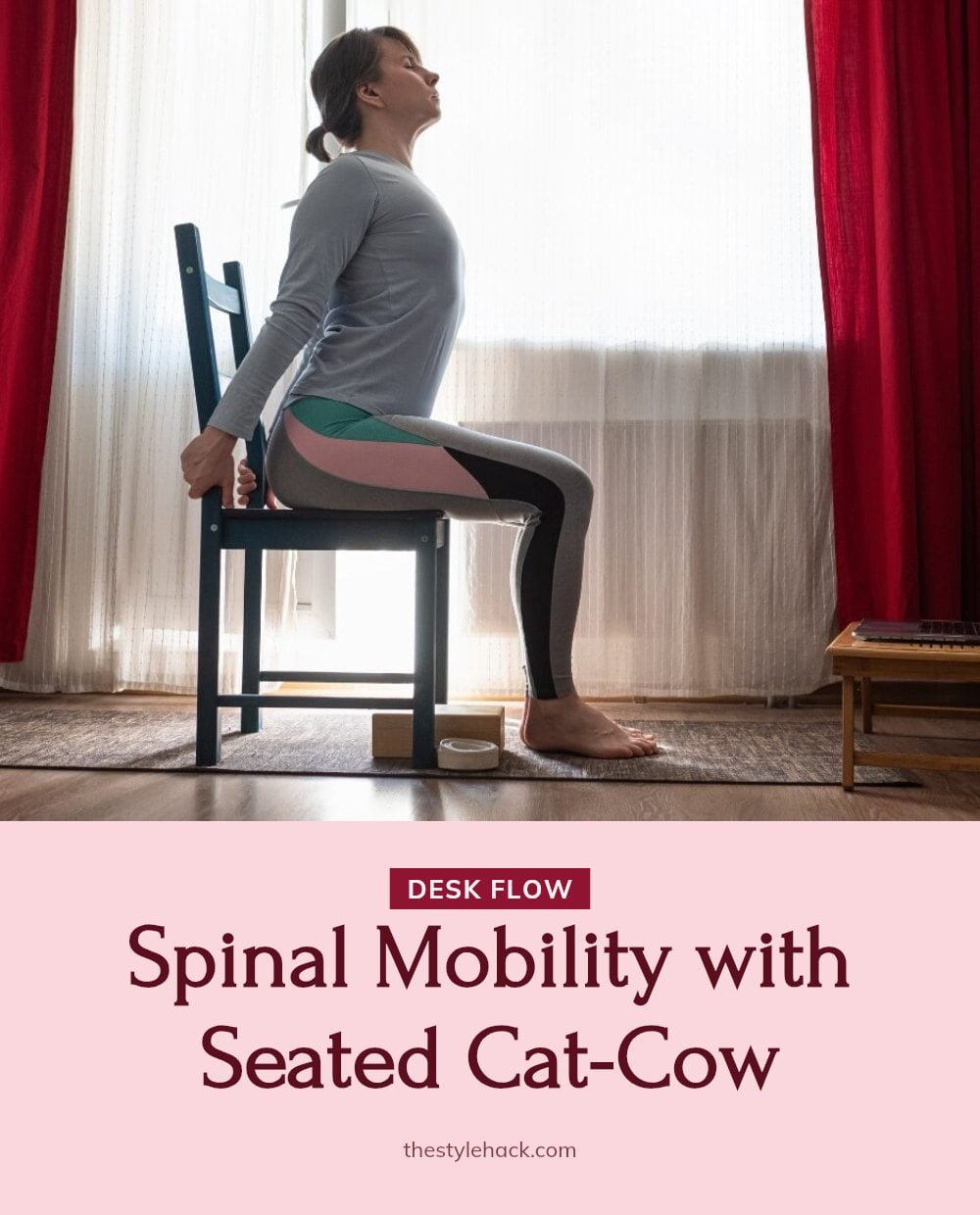
Sit at the edge of your chair with your feet flat on the floor and your hands on your thighs. Inhale as you arch your back, lift your chest, and look slightly upward (Cow position). Exhale as you round your spine, tuck your chin toward your chest, and draw your belly in (Cat position). Flow smoothly between the two positions for 8 to 10 repetitions, matching each movement with your breath.
- Sets and reps: 1 set of 8-10 slow cycles
- Form cue: Move from your spine, not just your head, let the motion travel through your whole back
- Make it easier or harder: Do 5 cycles if you’re new; add a brief pause at the end of each position for a deeper stretch
05. 5. Thread the Needle Stretch
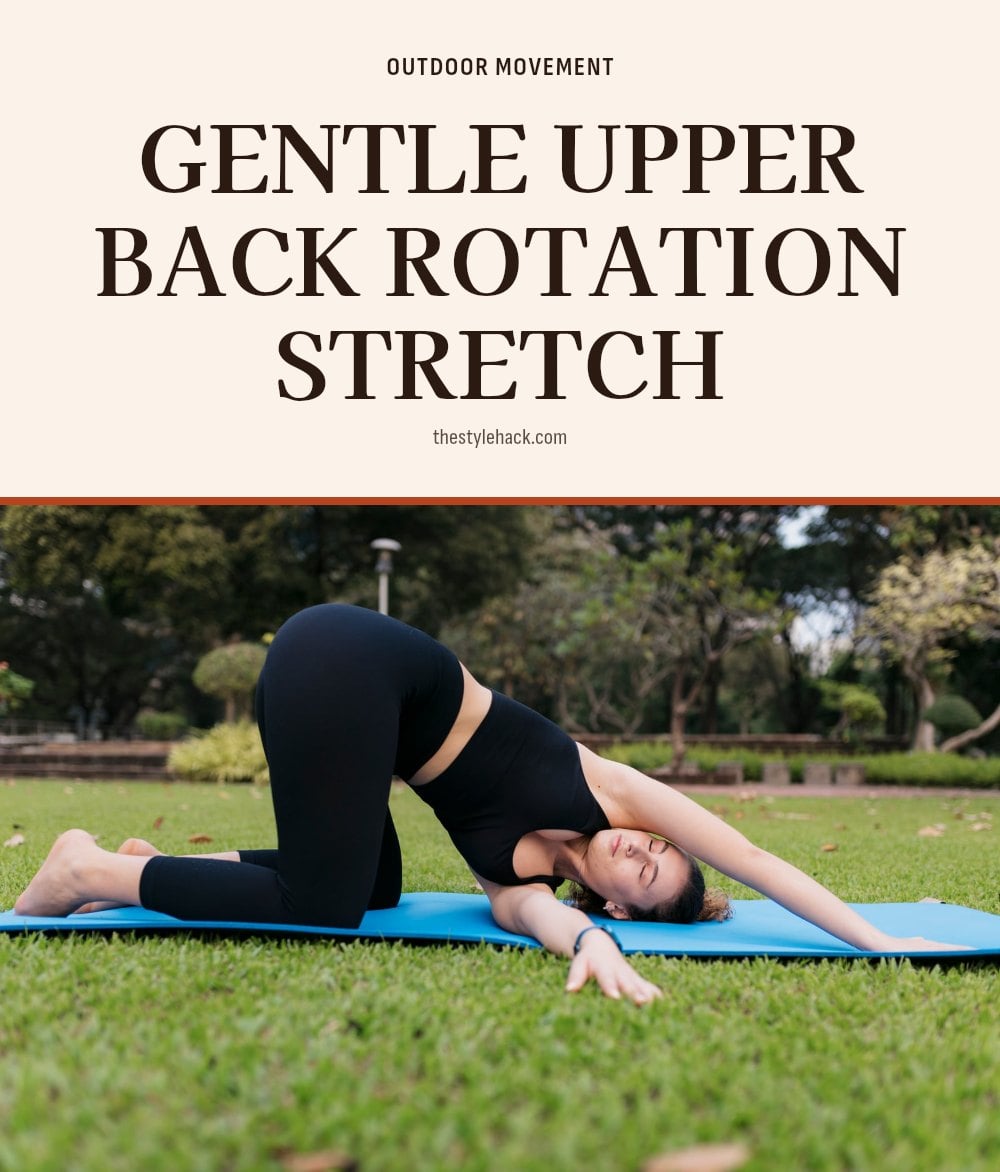
From all fours, reach one arm under your body, palm facing up, and rest that shoulder and the side of your head on the floor. If you are at a desk, you can do this seated: lean forward over your thighs and thread one arm under the opposite arm, resting your forehead on a folded towel or the desk. This stretch targets your thoracic spine, which often gets stiff from sitting.
- Time: Hold for 20-30 seconds per side, then repeat 2 times per side.
- Form cue: Keep your hips stacked over your knees and let your head be heavy.
- Make it easier or harder: For a deeper stretch, extend the opposite arm forward; for less intensity, keep your hips higher.
06. 6. Pelvic Tilts
Sit tall in your chair with your hands resting on your hips. Gently rock your pelvis forward so your lower back arches slightly, then rock it backward to flatten your lower back against the chair. Keep the movement small and controlled, focusing on the motion coming from your pelvis rather than your chest.
- Sets and reps: 10-15 gentle tilts.
- Form cue: Keep your upper body still and breathe steadily.
- Make it easier or harder: Slow the tempo for more control, or speed up slightly for a light warm-up.
07. 7. Seated Torso Twists

Sit tall with your feet flat on the floor. Place your left hand on your right knee and your right hand behind you on the chair. Gently twist your torso to the right, looking over your right shoulder. Hold, then switch sides.
- Time: 15-20 seconds per side, 2 times per side.
- Form cue: Keep your spine long and your hips facing forward as you rotate.
- Make it easier or harder: Shorten the hold for a gentler stretch, or reach your back hand further behind you for a deeper rotation.
08. 8. Deep Belly Breathing
Sit comfortably in your chair with your feet flat on the floor. Place one hand on your chest and the other on your belly. Inhale slowly through your nose, feeling your belly rise against your hand, then exhale slowly through your mouth, feeling your belly fall. This deep breathing engages your diaphragm and encourages spinal extension, which can help counter the slouch that comes from sitting.
- Time: Practice for 2-3 minutes, focusing on expanding your diaphragm with each inhale.
- Form cue: Keep your chest still; the movement should come from your belly, not your shoulders.
- Make it easier or harder: Start with 1 minute if 2-3 feels long, or extend the exhale to make it more challenging.
09. Your Weekly Posture Exercise Plan
Consistency is the foundation of better posture and comfort. Aim to do these exercises daily, even if you only have a few minutes at a time. The table below suggests a flexible weekly routine. Listen to your body and adjust the frequency or intensity as needed. You can also take short breaks every 30-60 minutes to stand and stretch.
| Day | Focus Area | Suggested Exercises |
|---|---|---|
| Monday | Neck and shoulders | Chin tucks, shoulder blade squeezes |
| Tuesday | Chest and upper back | Chest stretch at doorway, thread the needle |
| Wednesday | Spine mobility | Seated cat-cow, seated torso twists |
| Thursday | Core and pelvis | Pelvic tilts, deep belly breathing |
| Friday | Full body review | Choose 4 exercises from the week |
| Saturday | Gentle maintenance | Any 2-3 exercises you enjoy |
| Sunday | Rest or light stretch | Deep belly breathing only |
10. Common Posture Exercise Mistakes to Avoid
I’ve seen plenty of people do posture exercises with great intentions but zero results, and the reason is almost always one of these five mistakes.
- Rushing through exercises: Speed is the enemy here. When you fly through a chin tuck or a shoulder blade squeeze, you recruit the wrong muscles and reinforce the same poor patterns you are trying to fix. Move slowly, breathe, and focus on the muscle you are actually working.
- Only working one area: If you stretch your chest but ignore your neck and core, you are only addressing half the problem. Your posture is a chain that runs from your pelvis to your head, so include moves that target your neck, shoulders, chest, and abs.
- Expecting instant changes: Your body built its current posture over years of sitting, so it will not rewire itself in a week. Stick with the routine for several weeks before judging whether it is working.
- Skipping ergonomic fixes: No exercise can undo the damage of a monitor that sits too low or a chair that does not support your lower back. Adjust your setup first, then let the exercises complement it.
- Holding tension elsewhere: Many people clench their jaw, hike their shoulders, or grip the chair while doing these moves. Relax every part of your body that is not actively working, so the effort goes where it belongs.
11. Frequently Asked Questions
12. How long does it take to see results from posture exercises?
Many people notice improvements in comfort and posture within a few weeks of consistent daily practice. Results depend on factors like how often you exercise, your starting posture, and whether you also address your desk setup. Be patient and stick with it.
13. Can posture exercises help with chronic back pain?
Posture exercises may help reduce discomfort for some people by strengthening supporting muscles and improving alignment. However, chronic back pain can have many causes. If you have persistent pain, it’s important to see a doctor or physical therapist for a proper evaluation.
14. Is it okay to do posture exercises every day?
Yes, it is generally safe to do these exercises daily, as long as you perform them slowly and without forcing any movement. In fact, consistency is key to seeing results. If you feel any sharp pain or increased discomfort, take a break and consult a professional.
15. What’s the most important thing for good posture?
Good posture starts with awareness and alignment of your ears, shoulders, and hips in a straight line. Strengthening your core muscles and taking regular movement breaks throughout the day are also crucial. An ergonomic desk setup can help support these efforts.
16. Can I do these exercises if I’m pregnant?
If you are pregnant, it’s best to check with your healthcare provider before starting any new exercise routine. Some movements, like deep twists or lying on your back, may need to be modified or avoided. Listen to your body and stop if anything feels uncomfortable.
17. Final Thoughts
My recommendation is to pick two or three exercises from the list and do them a few times each day, especially after long periods of sitting. Expect to feel small changes in comfort within a few weeks if you stay consistent. The goal is not perfection, but simply moving more often and with better awareness throughout your workday.
This article is for general informational purposes only and does not constitute medical or professional advice. Always consult a doctor, physical therapist, or other qualified healthcare provider before starting any new exercise routine, especially if you have a pre-existing condition or experience persistent pain.
More Blog ideas
- How to Heal Chapped Lips Overnight with Simple Steps
- Atomic Habits: 5 Lessons to Build Better Habits
- Hyaluronic Acid for Beginners
- How to Build a Gentle Skincare Routine for Sensitive Skin
- Beat Frizzy Hair: Easy Remedies for Smooth, Shiny Strands
- How to Increase Your Daily Drinking Water Intake
- Washing Hair Mistakes to Avoid and What to Do Instead
- Bleaching Hair Tips for Less Damage
- How to Make Your Body Mist Last Longer All Day
- How to Fix Your Skincare Routine
- Nervous System Regulation Tips
- Vagus Nerve Exercises for Stress Relief