Posture Tips: 10 Simple Habits to Stand Taller Every Day
Improve your posture with 10 simple habits for standing taller and reducing pain. Learn practical tips for sitting, standing, and moving.

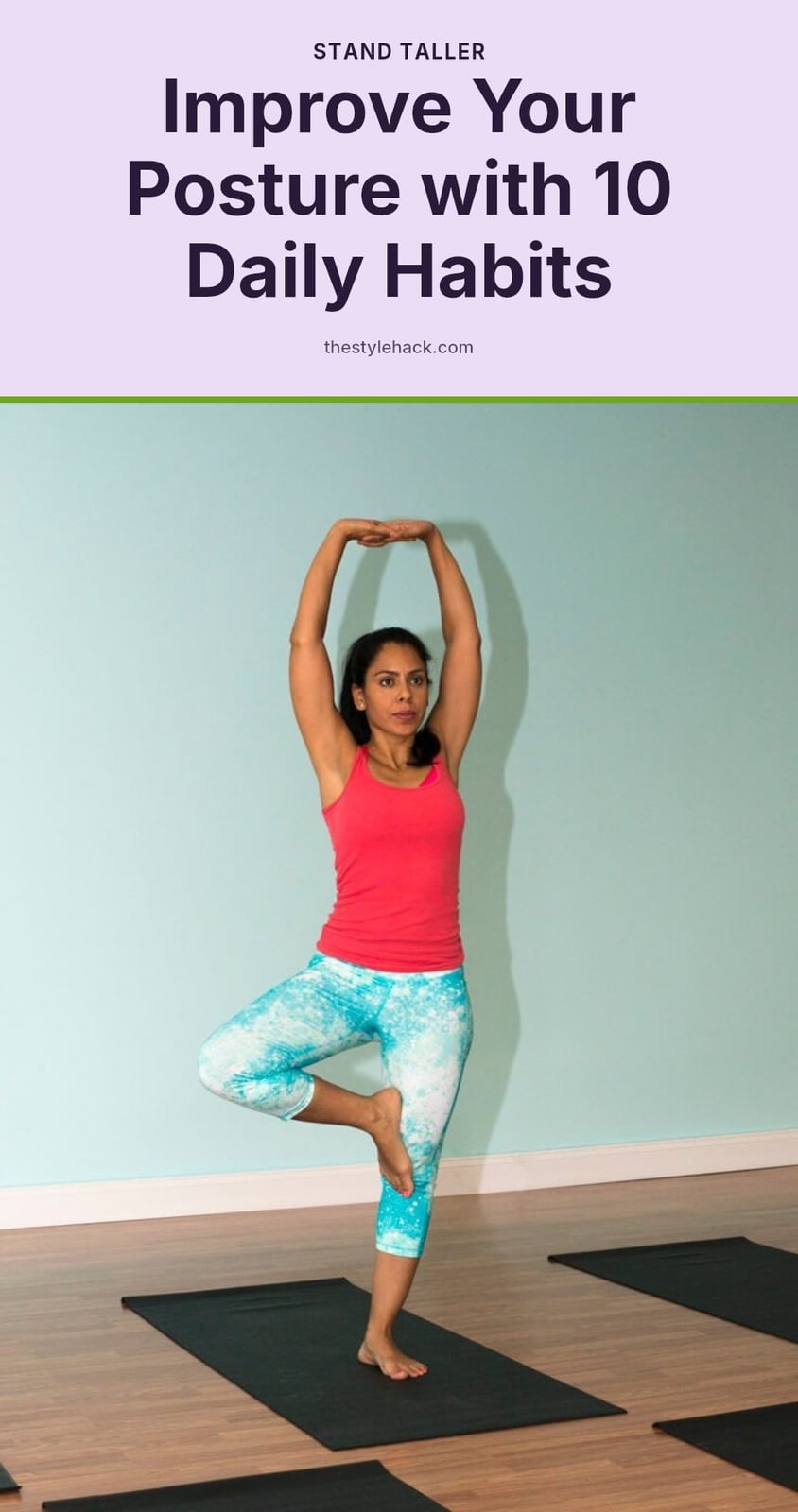
You’ve probably heard that good posture matters, but knowing it and doing it are two different things. Whether you’re dealing with back or neck discomfort, or you just want to stand a little taller and feel more confident, small daily habits can make a real difference. This article covers ten practical, easy-to-follow tips to help you align your body, reduce strain, and build better posture over time.
Key Takeaways
- Stand with your ears, shoulders, hips, and ankles in a straight line.
- Sit with feet flat, knees at 90 degrees, and back supported.
- Strengthen your core with planks, bird-dog, and gentle crunches.
- Adjust your screen to eye level to avoid tech neck.
- Take short breaks to stretch and move throughout the day.
01. What is Good Posture and Why Does It Matter?
Good posture is about aligning your body to reduce strain on muscles and ligaments, support your spine, and promote overall health. It means being mindful of how you hold yourself whether sitting, standing, or moving. Developing these habits can alleviate pain, improve breathing, and boost confidence, but it requires consistent effort.
02. 1. Align Your Body When Standing
When standing, imagine a straight line from your ears, through your shoulders, hips, and down to your ankles. Keep your shoulders back and down, not hunched forward or pulled up high. Engage your core gently by pulling your belly button toward your spine without holding your breath.
03. 2. Optimize Your Sitting Position
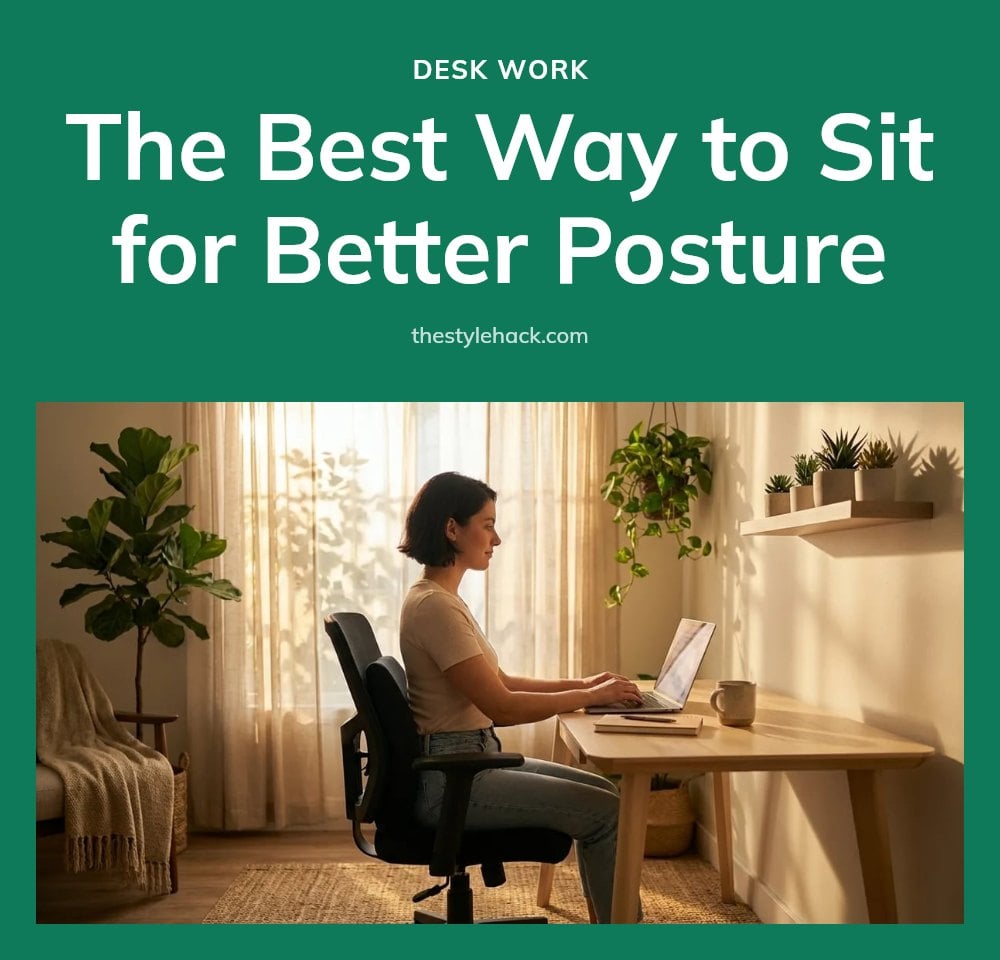
Sit with your feet flat on the floor and your knees bent at a 90-degree angle. Your back should be supported against the chair, ideally with a lumbar support pillow to maintain the natural curve of your spine. Avoid crossing your legs for extended periods, as this can misalign your hips and spine.
04. 3. Strengthen Your Core Muscles
Strong core muscles, including your abdominal and back muscles, are crucial for supporting your spine and maintaining good posture. Incorporate exercises like planks, bird-dog, and gentle crunches into your routine. My tip: Even simple awareness of engaging your core throughout the day can make a big difference.
05. 4. Stretch Regularly for Flexibility
Regular stretching improves flexibility and releases the muscle tightness that pulls you out of alignment. Focus on your chest, shoulders, and hips, these areas get especially tight from sitting all day. A simple chest opener (clasp hands behind your back and lift) or a seated hip stretch can make a noticeable difference.
My tip: Set a timer for a 2-minute stretch break every hour. Even rolling your shoulders back and tilting your head side to side helps reset your posture without needing to leave your desk.
06. 5. Adjust Your Workspace Ergonomically
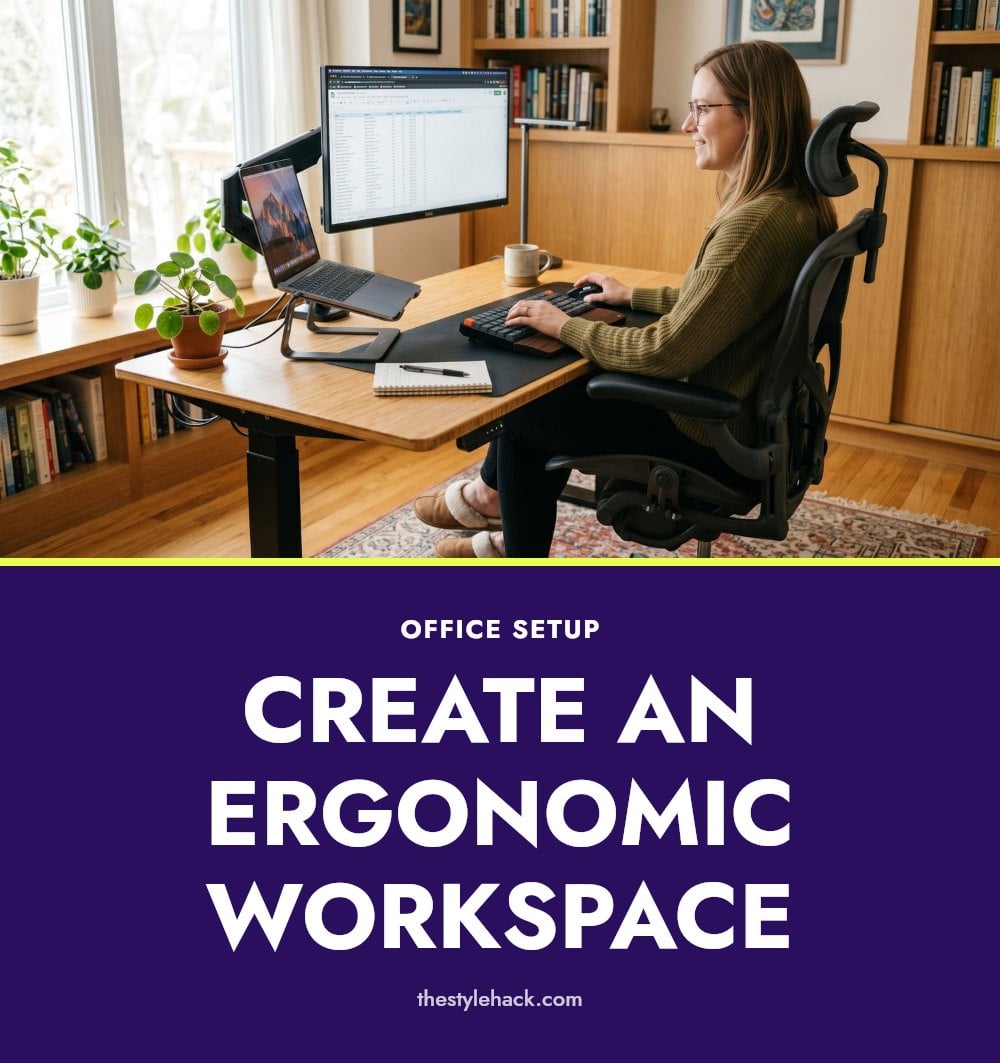
Your computer screen should be at eye level so you don’t look down all day. That alone prevents the forward head position that strains your neck. An ergonomic chair with lumbar support helps maintain your spine’s natural curve, and a standing desk converter lets you alternate between sitting and standing every 30-60 minutes.
If your feet don’t reach the floor, use a footrest. Keeping your knees at a 90-degree angle and your hips level takes pressure off your lower back.
07. 6. Be Mindful of ‘Tech Neck’
Looking down at your phone for hours strains your neck and upper back, a problem often called ‘tech neck.’ The simple fix: bring your phone up to eye level instead of bending your head down. When you’re at a desk, prop your tablet on a stand so you don’t hunch over it.
Take breaks every 20-30 minutes to look away from screens and gently stretch your neck. Roll your shoulders, tilt your head side to side, and look up at the ceiling for a few seconds to reverse the forward gaze.
08. 7. Choose Supportive Footwear
Your shoes are the foundation of your posture. Supportive footwear with good arch alignment helps keep your entire body stacked properly from the ground up. When your feet are stable, your knees, hips, and spine follow suit.
Avoid wearing high heels for long periods if they cause discomfort. Heels shift your center of gravity forward, forcing your lower back to overcompensate. For daily wear, choose comfortable shoes with arch support and a low, stable heel.
09. 8. Manage How You Carry Bags

Carrying a heavy bag on one shoulder throws off your spinal alignment. The constant uneven load forces your muscles to compensate, leading to strain over time. Use a backpack with two straps to distribute weight evenly, or switch shoulders frequently with a handbag. Lighten your load by removing non-essentials before you head out.
10. 9. Improve Your Sleeping Position
Your sleeping position matters for your posture the next day. Sleeping on your back or side with proper pillow support helps keep your spine neutral through the night. Choose a pillow that fills the gap between your head and the mattress without tilting your chin too far forward or back. A side sleeper may need a thicker pillow than a back sleeper.
11. 10. Practice Mindful Awareness
Consistent awareness is the most effective tool for better posture. Throughout the day, pause and ask: ‘Am I slouching? Are my shoulders relaxed? Is my core engaged?’ That quick check catches bad habits before they settle in. Tip: Set a gentle reminder on your phone to do a posture check every hour. It takes only a few seconds and keeps you on track.
12. Common Posture Mistakes to Avoid
Being Rigid: Good posture means a relaxed natural alignment, not forced stiffness. Ignoring Pain: Pain is a signal to ease up and adjust gradually. Overlooking Other Positions: Posture matters when you sit, sleep, and move, not just when you stand. Expecting Overnight Results: It takes weeks to months of consistent effort to form new posture habits. Neglecting Muscle Strengthening: Conscious effort alone won’t hold you upright without strong core and back muscles to support you.
13. Frequently Asked Questions
14. How long does it take to correct posture?
It typically takes several weeks to a few months of consistent effort to see noticeable improvements. Your body needs time to strengthen supporting muscles and adjust to new alignment habits. Be patient and focus on daily awareness rather than expecting overnight changes.
15. Can poor posture cause headaches?
Yes, poor posture can contribute to tension headaches. When your head sits forward of your shoulders, it strains the muscles in your neck and upper back, which can lead to headache pain. Improving your posture, especially while using screens, may help reduce this strain.
16. Is it bad to cross your legs when sitting?
Crossing your legs for extended periods can throw your pelvis out of alignment and put uneven pressure on your spine. It’s better to keep both feet flat on the floor. If you do cross, switch sides regularly and avoid staying in that position for too long.
17. What is ‘tech neck’ and how do I avoid it?
Tech neck is the forward head posture caused by looking down at your phone or tablet for long stretches. To avoid it, bring your device up to eye level so your head stays balanced over your shoulders. Take frequent breaks and stretch your neck and shoulders.
18. Does sleeping position affect posture?
Yes, your sleeping position can impact spinal alignment. Sleeping on your back or side with a supportive pillow that fills the gap between your head and mattress is generally recommended. This helps keep your spine neutral through the night, which supports better posture during the day.
19. Final Thoughts
Start with one or two habits that feel manageable, like adjusting your computer screen or taking a short walk every hour. Remember, improving posture takes consistent effort over weeks or months, so be patient with yourself. The goal is gradual, natural alignment, not forced stiffness. If you experience persistent pain, it’s wise to check in with a doctor or physical therapist for personalized guidance.
This article is for general informational purposes only and is not a substitute for professional medical advice. If you have persistent pain, a known spinal condition, or concerns about your posture, please consult a doctor or physical therapist. They can provide guidance tailored to your specific needs.
More Blog ideas
- How to Heal Chapped Lips Overnight with Simple Steps
- Atomic Habits: 5 Lessons to Build Better Habits
- Hyaluronic Acid for Beginners
- How to Build a Gentle Skincare Routine for Sensitive Skin
- Beat Frizzy Hair: Easy Remedies for Smooth, Shiny Strands
- How to Increase Your Daily Drinking Water Intake
- Washing Hair Mistakes to Avoid and What to Do Instead
- Bleaching Hair Tips for Less Damage
- How to Make Your Body Mist Last Longer All Day
- How to Fix Your Skincare Routine
- Nervous System Regulation Tips
- Vagus Nerve Exercises for Stress Relief






