How to Remove Deodorant Marks from Clothes
Tired of white streaks and yellow stains? Learn how to effectively remove deodorant marks from your clothes with common household items.

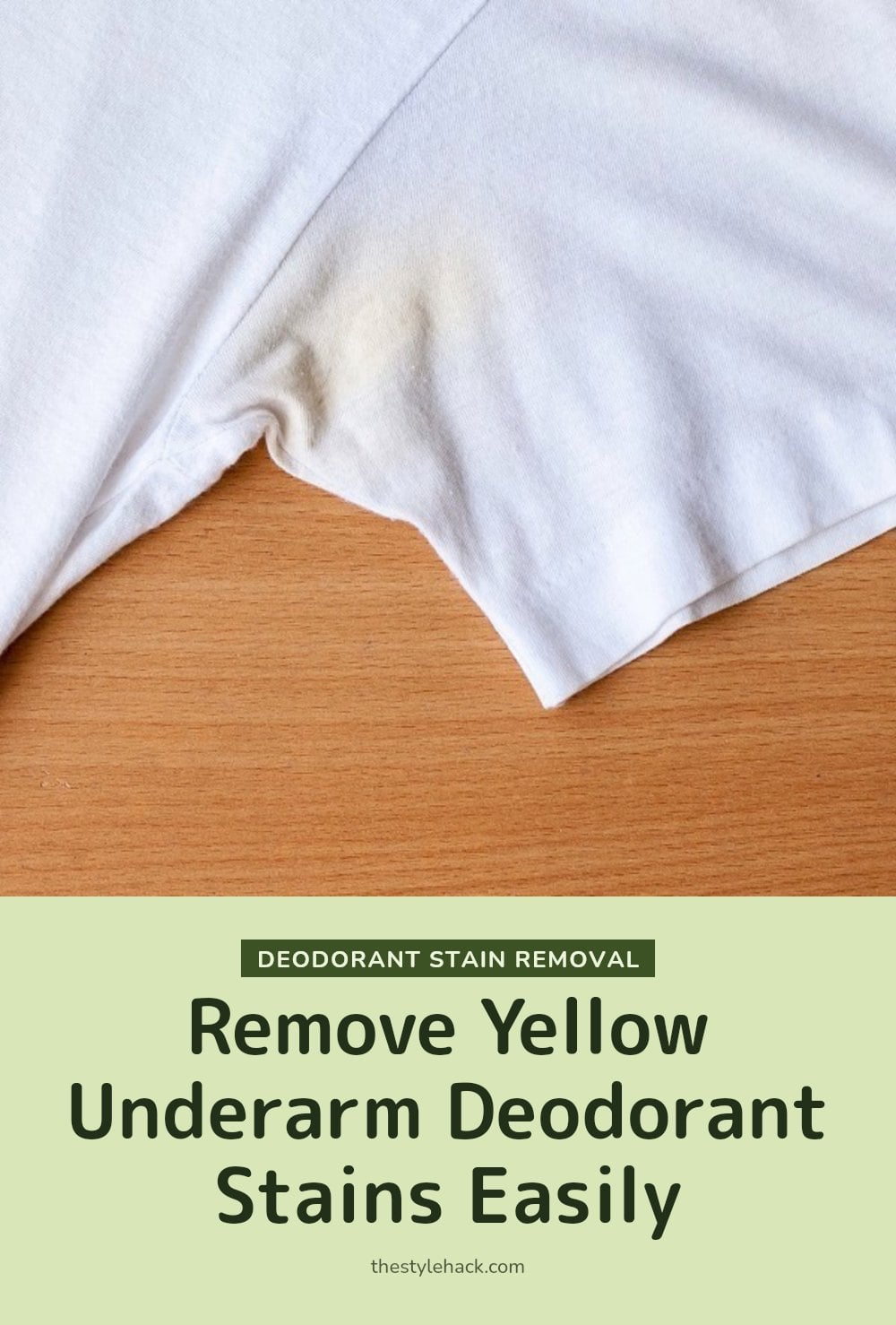
Deodorant marks on your favorite top can be frustrating, whether they show up as white streaks or stubborn yellow stains. The good news is that most of these marks are removable with items you already have at home. This article walks you through quick fixes, pre-treatment methods, and simple habits to keep your clothes looking clean and fresh.
Key Takeaways
- Remove fresh white marks with a dry cloth, dryer sheet, or nylon pantyhose.
- Pre-treat yellow stains with equal parts white vinegar and water for 30 minutes.
- Use a baking soda paste on set-in yellow stains for several hours before washing.
- Always wash stained clothes in cold water and air dry to avoid setting stains.
- Let deodorant dry for 2-3 minutes before dressing to prevent white streaks.
1. Quick Fixes for Deodorant Marks on Clothing
White deodorant marks often lift with a dry rub, try rubbing the fabric against itself or using a dryer sheet. Yellow stains, a reaction of sweat and antiperspirant, need pre-treatment with solutions like white vinegar, baking soda, or hydrogen peroxide before washing. Treat stains as soon as you notice them, and always test any solution on an inconspicuous area first to protect your garment.
2. Why Deodorant Leaves White Streaks and Yellow Stains
3. Why Deodorant Leaves White Streaks and Yellow Stains
White marks happen because aluminum salts in antiperspirants transfer onto fabric before the product dries. That powdery residue is just the product itself, not a stain.
Yellow stains are different. They come from a chemical reaction between sweat (which contains proteins and oils) and the aluminum compounds in your antiperspirant. Over time, that reaction sets into the fabric, making the stain harder to remove. That is why prompt treatment matters.
4. Essential Tools for Deodorant Stain Removal
Essential Tools for Deodorant Stain Removal
- Dryer sheet or nylon pantyhose: For lifting fresh white marks without water.
- White vinegar: Mixes with water to pre-treat yellow stains.
- Baking soda: Made into a paste to absorb and lift set-in yellow stains.
- Hydrogen peroxide: Works on stubborn yellow stains, but only on light fabrics and after a spot test.
- Dish soap: Grease-cutting formulas break down the oily residue in sweat and deodorant stains.
5. Effective Methods for Removing White Deodorant Marks
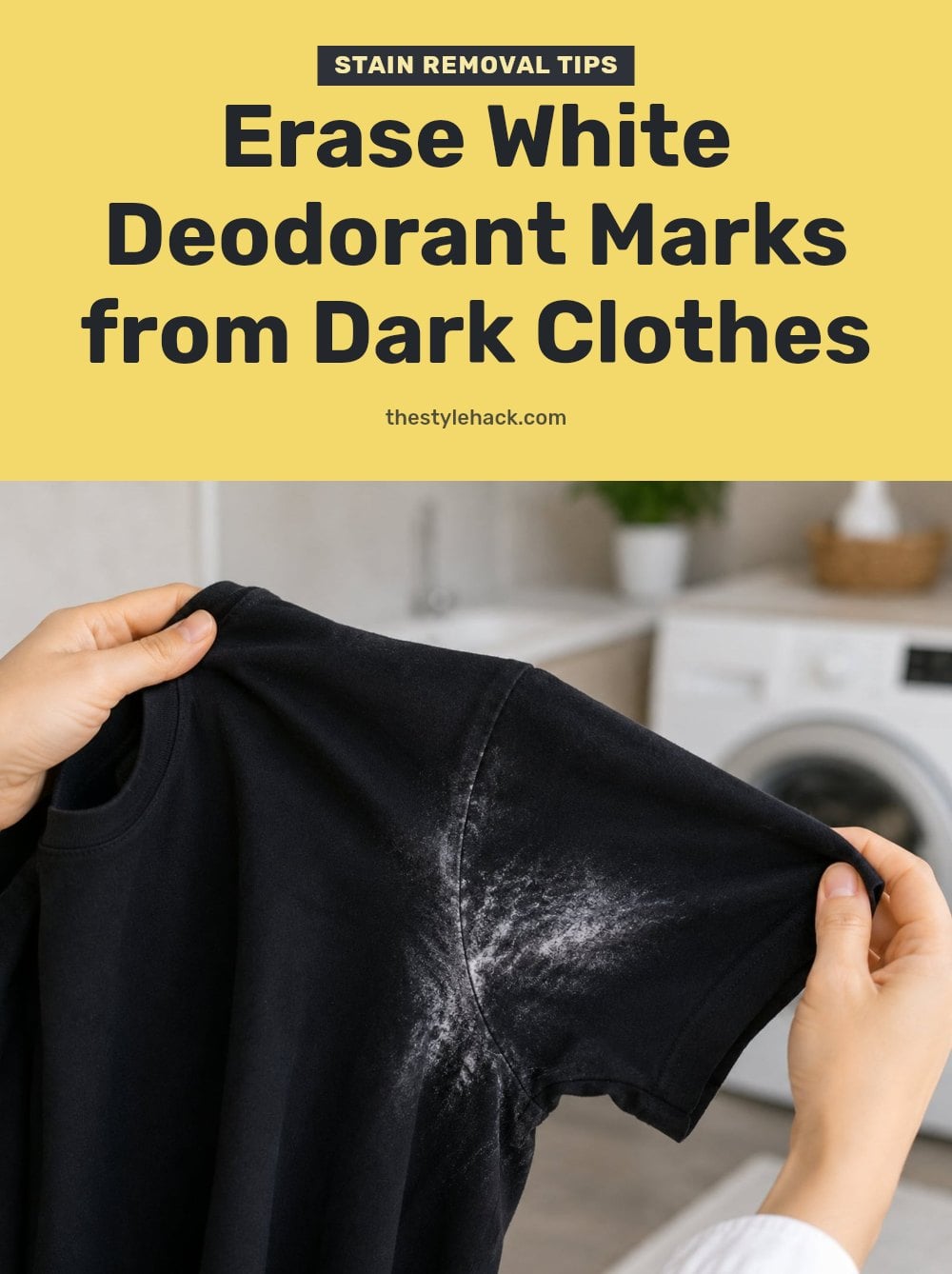
6. Effective Methods for Removing White Deodorant Marks
Dry cloth or dryer sheet: Rub a clean, dry cloth or a dryer sheet over the white mark. The friction lifts the residue without spreading it.
Fabric against fabric: For fresh marks, gently rub the fabric against itself. This often dislodges the powder before it sets.
Nylon pantyhose: Surprisingly effective. Ball up a pair of clean nylon pantyhose and rub the mark. The nylon grabs the residue without damaging the fabric.
Caution: Do not use a wet cloth on white marks. Water spreads the residue and makes it harder to remove. Stick to dry methods for these marks.
7. How to Tackle Stubborn Yellow Deodorant Stains
8. White Vinegar Soak
Mix equal parts white vinegar and water in a bowl or sink. Submerge the stained area for 30 minutes, then gently blot with a soft cloth. The acid breaks down the residue without harming most fabrics.
Caution: Test on an inside seam first, as vinegar can affect some dyes.
9. Baking Soda Paste
For set-in yellow stains, stir baking soda with a little water to form a thick paste. Spread it over the stain, let it sit for several hours, then brush off with an old toothbrush before washing.
My tip: Leave it overnight for really stubborn marks, but keep the paste damp so it doesn’t dry out.
10. Hydrogen Peroxide for Light Fabrics
Dilute hydrogen peroxide with two parts water, then apply to the stain on white or light-colored clothing. Let it bubble for 10-15 minutes, then rinse thoroughly. It acts as a gentle bleach to lift yellowing.
Caution: Peroxide can bleach colored fabric, so always spot-test and never use it on dark clothes.
11. Dish Soap Pretreatment
Rub a grease-cutting dish soap directly into the stain, working it in with your fingers or a soft brush. Let it sit for 15 minutes before laundering in cold water. The soap breaks down the oily sweat and deodorant residue that causes yellowing.
12. Common Deodorant Stain Removal Mistakes to Avoid
Rubbing white marks with a wet cloth: This spreads the residue deeper into the fibers, making it harder to remove. Always use a dry method, like a dryer sheet, for fresh white marks.
Using hot water on yellow stains: Heat sets protein-based stains, so wash stained items in cold water instead. Check the care label first.
Applying too much pressure: Vigorous rubbing can damage or fray the fabric. Blot or gently work the stain remover in with a soft brush or old toothbrush.
Drying before checking: Heat sets stains permanently. Always air dry the garment after treatment to confirm the stain is gone before machine drying.
Using chlorine bleach on yellow stains: It can react with aluminum to worsen or darken the discoloration. Use oxygen-based bleach for white fabrics instead.
13. Preventing Deodorant Marks on Your Clothes
Allow deodorant to dry completely: Wait 2-3 minutes after applying before getting dressed. This simple habit prevents most white streaks.
Apply less product: A couple of swipes is usually enough. Over-application leaves excess residue that transfers to fabric.
Choose the right product: If yellow stains are a recurring problem, consider switching to an aluminum-free deodorant. It eliminates the aluminum-sweat reaction that causes yellowing.
Wear an undershirt: A thin cotton layer between your skin and outer clothing catches residue before it reaches your nicer tops. It also absorbs sweat, reducing stain-forming moisture.
14. Frequently Asked Questions
15. Can I use bleach on yellow deodorant stains?
No, avoid chlorine bleach on yellow deodorant stains. The bleach can react with the proteins and aluminum in the stain, making it worse or turning it darker. Instead, use oxygen-based bleach on white fabrics, and always test it on an inconspicuous area first.
16. Does hot water set deodorant stains?
Yes, hot water can set protein-based stains like sweat, making them harder to remove. Always wash stained items in cold water after pre-treatment. Also, avoid using a hot dryer until the stain is completely gone, as heat can permanently set the mark.
17. How do I prevent white deodorant marks?
The simplest way is to let your deodorant dry completely before getting dressed, which usually takes 2-3 minutes. You can also apply less product, as a couple of swipes is typically enough. Choosing a product with lower aluminum content may also help.
18. Is it safe to use hydrogen peroxide on colored clothes?
Hydrogen peroxide can bleach colored fabrics, so it should be used with extreme caution. Always dilute it and spot test on an inside seam or inconspicuous area first. If you see any color change, do not use it on that garment.
19. What is the best way to remove old, set-in yellow stains?
For older stains, make a paste with baking soda and water, apply it to the stain, and let it sit for several hours before washing. You can also try a vinegar soak for 30 minutes. These methods help break down the residue, but results may vary depending on how long the stain has been set.
20. Final Thoughts
For the best results, treat deodorant marks as soon as you notice them. Start with a dry rub for white streaks, and use a vinegar soak or baking soda paste for yellow stains before washing in cold water. Remember to check the care label and spot test any solution first. With these steps, you can keep your clothes looking clean and extend their life.
More Blog ideas
- How to Heal Chapped Lips Overnight with Simple Steps
- Atomic Habits: 5 Lessons to Build Better Habits
- Hyaluronic Acid for Beginners
- How to Build a Gentle Skincare Routine for Sensitive Skin
- Beat Frizzy Hair: Easy Remedies for Smooth, Shiny Strands
- How to Increase Your Daily Drinking Water Intake
- Washing Hair Mistakes to Avoid and What to Do Instead
- Bleaching Hair Tips for Less Damage
- How to Make Your Body Mist Last Longer All Day
- How to Fix Your Skincare Routine
- Nervous System Regulation Tips
- Vagus Nerve Exercises for Stress Relief






