Scripting Method Explained: Manifest Your Desires with This Technique
The Scripting Method Explained helps you manifest desires by writing as if they are real. Learn this powerful technique to clarify goals and attract positive.


If you’ve ever wished you could write your dreams into reality, the Scripting Method might be exactly what you’re looking for. This manifestation technique, rooted in the Law of Attraction, involves writing your desired future in the present tense as if it’s already happened. It’s a powerful way to clarify your intentions, engage your emotions, and make your goals feel tangible. In this article, I’ll walk you through what scripting is, how to do it step by step, common mistakes to avoid, and tips to make your practice more effective.
Key Takeaways
- Write your desires in present tense, as if they’ve already happened.
- Focus on positive emotions and sensory details in your script.
- Re-read your scripts regularly to reinforce your intentions.
- Avoid writing about what you don’t want or using future tense.
- Combine scripting with aligned action toward your goals.
1. What Exactly is the Scripting Method?
The Scripting Method is a manifestation technique rooted in the Law of Attraction. You write your desired future in the present tense, as if it has already happened. Instead of listing goals, you craft a detailed narrative that includes emotions, sensory experiences, and positive outcomes. The goal is to immerse yourself in the feeling of already having achieved your desires, making them feel real and attainable. This alignment of your mindset with your goals is what sets the method apart from simple wishful thinking.
2. Gather Your Tools for Scripting Success
You don’t need much to start scripting, but the right tools can make the practice feel more special.
- A dedicated journal or notebook: Choose one you reserve only for your scripts. This creates a ritual and keeps your intentions organized.
- A favorite pen that feels good in your hand: Writing comfort matters. A smooth pen helps you stay in the flow.
- Optional: A computer or tablet for digital scripting: If you prefer typing, that works too. Use a document or note app.
- Optional: A quiet, inspiring space to write: A spot where you feel calm and focused makes it easier to connect with your emotions.
3. Your Step-by-Step Guide to Scripting Your Desires

Ready to try it? Here’s my step-by-step process for scripting your desires.
- Choose one specific desire: Pick a single goal, whether it’s a career change, a new relationship, or better health. Focusing on one keeps your energy clear.
- Find a quiet time and space: Set aside a few minutes when you won’t be interrupted. Consistency matters more than the exact duration, so even 5 minutes works. I love to light a candle or play some calming music to set the mood. It really helps me get into the right headspace.
- Write in the present tense: Describe your desire as if it has already manifested. Write “I am” or “I have” instead of “I will.” For example, “I am thriving in my new role as a team lead.”
- Include rich sensory details: What do you see, hear, smell, taste, and touch? If you’re scripting about your dream home, describe the light streaming through the windows, the smell of fresh coffee, and the feel of the soft rug under your feet.
- Describe your emotions: How do you feel now that your desire has come true? Joy, relief, pride, excitement. Let those feelings fill you as you write.
- Express gratitude: Thank the universe, your higher self, or simply life itself for this manifestation. Gratitude amplifies the positive energy.
- Re-read your script regularly: Return to it as often as feels sustainable, whether that’s daily, weekly, or a few times a month. The key is to keep reinforcing your intentions and feelings without turning it into a chore.
4. How Scripting Works to Bring Your Dreams to Life
Scripting works on several levels, which is why it’s such a popular tool.
5. It Clarifies Your Intentions
When you write in detail, you’re forced to articulate exactly what you want. Vague wishes become concrete goals, and that clarity makes them easier to pursue.
6. It Engages Your Subconscious Mind
Reading and writing your script repeatedly sends a message to your subconscious that this reality is real. Your brain starts to accept it as possible, which shifts your perception.
7. It Aligns You with the Law of Attraction
By focusing on positive emotions and outcomes, you cultivate a positive mindset. That mindset is believed to attract similar energies and opportunities.
8. It Influences Your Actions
Regular practice reinforces the desired mindset, which subtly changes your daily choices. You might notice yourself taking small steps you wouldn’t have before.
9. It Bridges Desire and Experience
Scripting helps bridge the gap between abstract desire and concrete experience. The more you feel the emotions while writing, the more natural manifestation becomes. My tip: I’ve found that the more I truly feel the emotions while writing, the more powerful the effect.
10. Common Scripting Mistakes and How to Fix Them
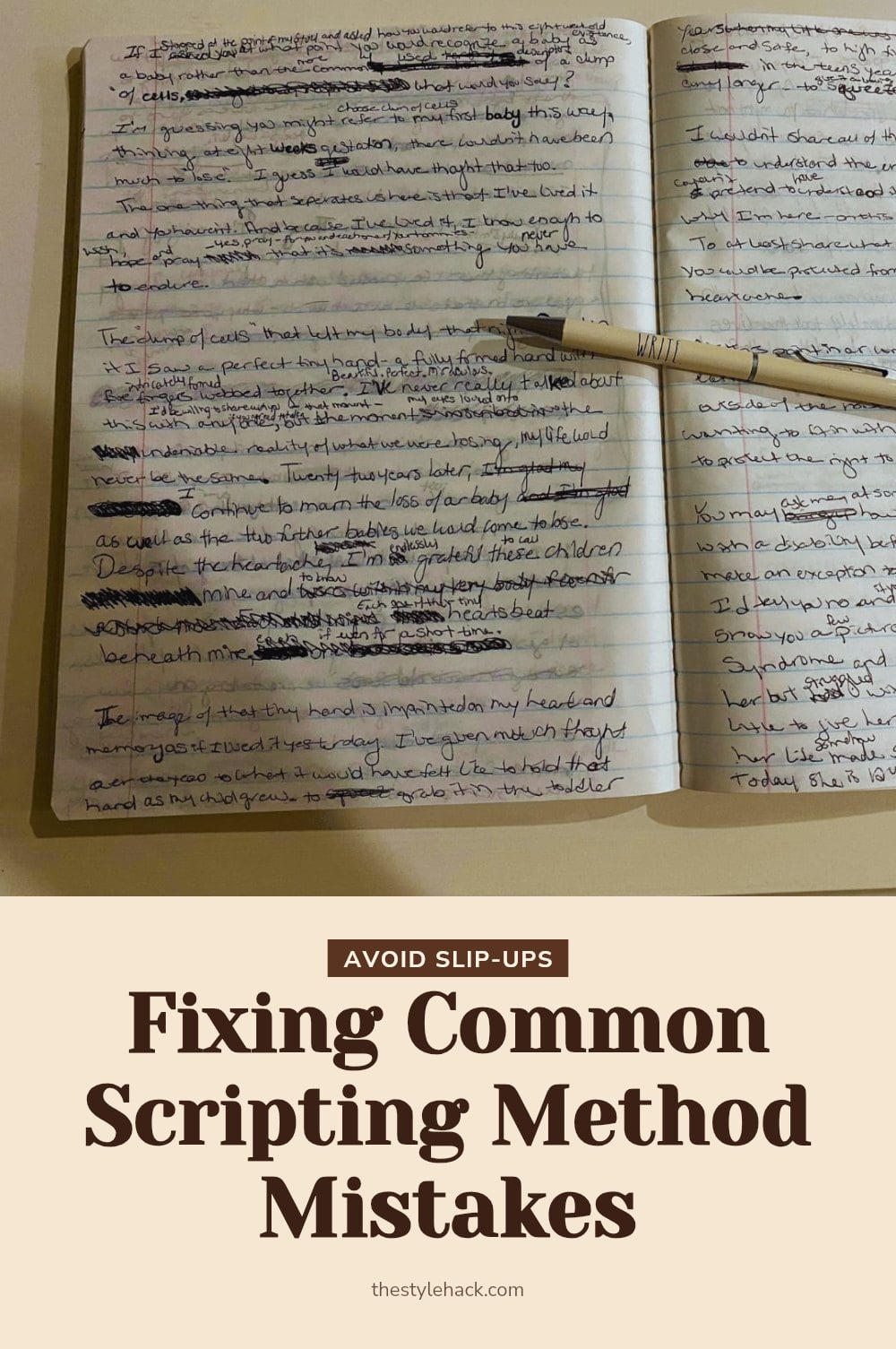
Writing in the future tense: This is the most common mistake. If you write “I will have a new job,” your mind still sees it as something out of reach. Switch to present tense: “I am thriving in my new role.” Describe “I am” or “I have” instead of “I will.”
Focusing on the ‘how’: Don’t worry about the logistics of how your desire will manifest. Your job is to focus on what you want and why you want it. Leave the “how” to the universe.
Being too vague: A vague script like “I want more money” lacks power. Be specific: describe the exact amount, how it feels to spend it, and what you buy. The more vivid, the better.
Treating it as a one-time activity: Consistency is key. Even five minutes of scripting a few times a week keeps your intentions alive. Make it a regular practice.
Not taking aligned action: Scripting is powerful, but it’s not a substitute for practical steps. My tip: I always ask myself, “What’s one small thing I can do today that aligns with this dream?” Then I do it.
Becoming fixated on the outcome: Enjoy the process. Detach from the timing and trust that your desires are on their way. The joy is in the feeling, not the deadline.
11. Best Tips for a Powerful Scripting Practice
Incorporate gratitude: Express thanks for your manifested desires within your script, as if they are already yours. My tip: I always start my scripts with “I am so incredibly grateful that…” It instantly shifts my energy.
Keep it positive: Focus only on what you want, not what you lack or fear. Avoid any negative phrasing. Instead of “I am not stressed,” write “I feel calm and at peace.”
Re-read your scripts: Regularly revisit what you’ve written to reinforce your intentions and feelings. You can read them daily or weekly. I keep mine by my bed for a quick morning reset.
Combine with other methods: Pair scripting with visualization or affirmations to amplify its effects. After you write, close your eyes and picture your scene for one minute.
Keep it private: If you feel more comfortable, keep your scripts to yourself. This helps maintain a sense of personal power and focus. Your journal is your safe space.
Write from joy: Only script when you’re in a positive, inspired mood. If you’re feeling down, wait until your energy shifts. Writing from a place of genuine joy makes all the difference.
12. What to Expect: Timeline and Commitment for Scripting
Timeline for results varies greatly. Some desires may manifest quickly, while others take time. Consistency is more important than speed. Tip: Don’t get hung up on the “when”! Just focus on the “feeling” and trust the process.
How often to script is up to you. Many people script daily, weekly, or whenever they feel inspired. There’s no strict rule, but consistency reinforces your intentions. Even a few minutes once a week works.
The cost of scripting is zero if you use basic writing tools like a notebook and pen. If you prefer digital scripting, you may already own a computer or tablet, so there’s no extra expense unless you need to buy one. No expensive journals or courses required.
13. Beyond the Page: Integrating Scripting into Your Life
Scripting isn’t just about the words on the page; it’s about shifting your internal state. By regularly immersing yourself in the feeling of your desires, you begin to embody the person who already has them. This internal shift can subtly, yet powerfully, influence your daily choices and perceptions.
14. Your Reality, Your Pen
Remember that the Scripting Method is a tool for personal empowerment. It’s about taking an active role in shaping your reality, not passively waiting for things to happen. Combine your powerful written intentions with aligned actions, and watch how your world begins to transform. Good to know: I truly believe scripting helps you become the person who naturally attracts what you desire.
15. Frequently Asked Questions
16. How often should I practice scripting?
There’s no strict rule, but consistency is often emphasized. Some people script daily, while others find a few times a week works well. The key is to make it a regular habit that feels natural. If you’re just starting, try to set aside a few minutes each day or every other day. Pay attention to what feels sustainable and enjoyable for you.
17. Can I script for multiple desires at once?
It’s possible, but focusing on one specific desire at a time is often recommended. Writing about multiple goals can dilute your energy and make your script less detailed. If you have several desires, consider creating separate scripts for each. This allows you to give each one the clarity and attention it deserves.
18. What if I don’t feel inspired to script?
If you’re not in a positive mindset, it’s okay to wait until you feel inspired. Forcing yourself to write when you’re feeling negative can reinforce those feelings. Take a break, do something uplifting, and return to scripting when you feel more aligned. The practice should come from a place of joy, not obligation.
19. Is scripting the same as visualization?
They’re related but not identical. Visualization involves mentally picturing your desired outcome, while scripting is the act of writing it down in narrative form. Scripting can enhance visualization by making the experience more concrete and engaging your senses through words. Many people combine both techniques for a more powerful manifestation practice.
20. How long does it take to see results from scripting?
Results vary greatly among individuals and depend on the specific desire. Some desires may manifest quickly, while others take time. Consistency is more important than speed. Instead of fixating on when results will appear, focus on the feeling of having already achieved your desires. Trust the process and keep taking aligned action.
21. Final Thoughts
Scripting is a simple yet profound practice that can help you align your thoughts and feelings with your deepest desires. My tip: pick one specific goal, write about it vividly in the present tense, and infuse your script with gratitude. Don’t worry about the timeline; consistency matters more than speed. Expect that results may take time, and remember to take practical steps alongside your scripting. Trust the process and enjoy the journey of bringing your dreams to life.
More Blog ideas
- How to Heal Chapped Lips Overnight with Simple Steps
- Atomic Habits: 5 Lessons to Build Better Habits
- Hyaluronic Acid for Beginners
- How to Build a Gentle Skincare Routine for Sensitive Skin
- Beat Frizzy Hair: Easy Remedies for Smooth, Shiny Strands
- How to Increase Your Daily Drinking Water Intake
- Washing Hair Mistakes to Avoid and What to Do Instead
- Bleaching Hair Tips for Less Damage
- How to Make Your Body Mist Last Longer All Day
- How to Fix Your Skincare Routine
- Nervous System Regulation Tips
- Vagus Nerve Exercises for Stress Relief






